


Roamer 12 was effectively dead.
It was 2018, and he’d just returned from a holiday in France with his parents and younger brother. He’d been getting terrible chest pains, but he thought it was indigestion. His parents insisted on dropping him at the hospital in East London. He said it wasn’t necessary. They said it was and almost immediately, the hospital did an ECG. Then it was all panic stations.
They got him into an ambulance with a blue light and rushed him to a hospital in central London, famous for its heart division. He arrived at one in the morning. They tried to put a stent in but couldn’t get it in. He had multiple organ failure. What would normally be a 45-minute operation ended up taking four hours.
They put him in a coma and it was not looking good.
Two days later, his younger brother—who had been on that same holiday—had a different kind of heart attack. It also left him in a coma. But his brother was in a persistent vegetative state. He’d been without oxygen to his brain for some time.
When Roamer 12 finally woke up after some weeks and learned about this, it was all too much to take in.
After some months, the hospital had to ask for permission to let his brother go.
“It was a tough time for my family,” he tells me. “My dad, particularly, is a committed Catholic, and he said, ‘You’re asking me to kill my son.’ There is a way of looking at it like that. But the point was, he was never going to recover. Would he have wanted to spend 40 years in a hospice on a machine? I don’t think so. He was an active guy. That would not be a life he would have relished.”
After all of that—the near death, the loss, the grief—life seemed different. Priorities changed.
“The idea of getting on the tube in rush hour to go and do a job that I didn’t really care about... I just thought, what’s the point?”
So he decided to move to Spain.
He doesn’t really know why he chose Spain. Could’ve been France. But he just wanted to live in Europe. He likes Europe.
He came out to Valencia for a few days with a mate. Loved it. Saw a flat and said, “I’ll take it. I need a month to get my crap together and move my stuff here.”
They said okay, we can wait a month.
He went home, booked a lorry to ship his furniture and everything, and started his new life in Spain.
That was six years ago.
In Valencia, they have a phrase: “pensati fet.” It’s Valenciano, the local dialect—a bit like Catalan. In Castellano Spanish, it would be “pensado y hecho.” In English... it doesn’t really exist. But it means something like “thought and did.” Thought about it and just did it.
You see it on shop names. People use it all the time. It’s a philosophy.
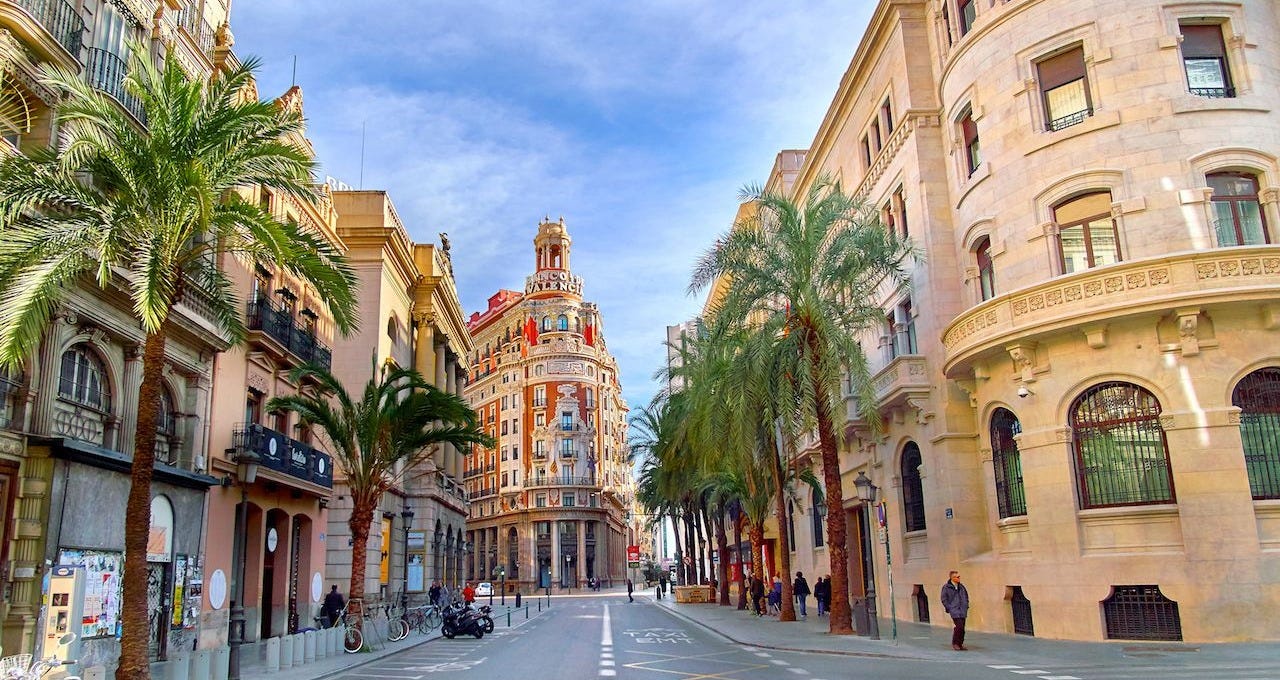
Roamer 12’s journey to Spain was pensati fet. He thought he’d do it, and he just did it.
He told his family at Christmas that he was moving to Spain that month. His daughter (he’s divorced) didn’t really have any reaction.
“Afterwards, I said to her, ‘You didn’t really have any reaction when I said I was moving to Spain. What do you think?’ And she said, ‘Well, it’s just you, isn’t it, Dad?’”
She reminded him: one day he announced he was going to drive a lorry to India and probably wouldn’t have internet or Wi-Fi, but he’d be fine. Off he went. Then he came back, and a few weeks later said he was going to Cuba for a month. Again, probably not much Wi-Fi, but he’d be fine.
“And now you say you’re moving to Spain. Well, what do you think I’m going to think? I’m going to think, yeah, right, you’ll be back in three months.”
Six years later, she’s had to eat her words. She’s 20 now and she’s been over loads of times. This month, she’s coming with his 92-year-old father.
It’ll be the first time his dad has visited.
“He doesn’t really like traveling, but I think he thinks he should try and see me before I die. Or before one of us dies, I should say.”
Roamer 12 moved to Spain in 2020 as a European citizen. The UK had just done this “batshit crazy thing” called Brexit—left the European Union in what he calls “a suicidal move whipped up by the right wing who made it all about immigration.”
“It’s got nothing to do with immigration,” he says. “Immigration has got much worse since Brexit. So even the reasons they gave for it are ludicrous.”
Now Brits are in the same position as Americans, Australians, whoever. No special rights in Europe. They need visas like everyone else.
But in 2020, the EU gave the UK a one-year extension because the UK “hadn’t got its shit together.” So Roamer 12 moved there as a European citizen. Now he has to renew his residency as a British citizen.
“If you know anything about Spain,” he says, “the bureaucracy is a nightmare. It’s like the 1950s here. Everything is on paper. You go to an office and they say, ‘Oh no, you didn’t want to come to this office. You wanted the one on the other side of town.’ Everything takes days. It’s just a nightmare.”
But he got in and now he’s applying for his Irish passport because his parents are Irish.
He called the passport office in Dublin. They said he needs a copy of his father’s marriage certificate.
“I said, ‘Well, my mum passed away two years ago, so I’m just going to apply under his birth certificate.’
Then they said, ‘No, you have to have a copy of his marriage certificate.’
I said, ‘That’s going to be really hard because he got married in the Vatican in Rome, and I don’t know where that is.’”
They insisted that he’d have to get the copy.
“I said, ‘If my mum is dead and we don’t have a copy, why can’t I just apply under his birth certificate? If he was married to somebody who wasn’t Irish, I’d still be entitled to it.’
And they said, “Yeah, but we know that he was married, and you need to have the marriage certificate to fill in the form.’”
I asked, ‘Can’t we make an exception?’
She said, ‘No. No exceptions.’”
His younger brother—the one who died—had the marriage certificate because he was going to get his Irish passport. But now Roamer 12 doesn’t know where it is.
“I said, ‘Well, thank you so much for your great humanity. It’s been an absolute pleasure dealing with you.’ Now I’ve got to write to the Vatican to ask for a copy of a marriage certificate for a ceremony that took place in 1964.”
About 18 months ago, Roamer 12 wasn’t feeling right. He didn’t really know what it was, so he took himself to the “urgencias”—the emergency room.
They ran a load of tests. A nephrologist (kidney specialist) came down to see him. Amazing woman.
“She said, ‘You are in kidney failure, and we have to admit you straight away and try and get your kidney rate up a little bit.’”
They succeeded in getting it up enough that he wouldn’t die immediately. But they said he’d need dialysis and they’d put him on the list for a kidney transplant.
Spain, interestingly, is the world’s leading country in terms of transplants performed. He looked into it: in 1980 or the late ‘70s, they brought in a law that unless you opt out, you’re giving presumed consent to donate your organs.
“That massively boosted the number,” he explains, “because most people don’t think they’re going to die.”
In the US and the UK, you have to opt in. And unless they know for sure, they won’t do anything. But if you have to opt out? Most people don’t bother. So the organ donation rate is significantly higher.
They got him on dialysis, which was problematic because he has incredibly thin veins. Trying to get a needle in was horrible. Blood everywhere. After about five to ten attempts, they said, “It’s just not working.”
They put a catheter into his jugular and his chest. Two portals going into him.
“I’m like a cyborg,” he laughs. “I’m like Robocop.”
The Spanish healthcare team was amazing. After he got the transplant, they kept him in for a couple of weeks. Then they let him go home. But they did a biopsy. He was on his way home when he got a phone call from the hospital saying he had to come back.
“I said, ‘You must be joking. I’m not coming back. I’ve just been there for two weeks.’ They said, ‘You have to come back. We just got the results of your biopsy.’ I said, ‘Well, I’m not coming back.’ And I put the phone down.”
It rang again immediately. He ignored it. Then it rang a few minutes later. He answered.
It was his nephrologist, Sandra.
“She was talking to me like I was her child. I’m very close to Sandra. She said, ‘You’re an adult, you’re not a child, and your kidney is in rejection. So you do have to come back. But I understand it’s difficult for you. So if you like, go home, have a shower, make yourself a coffee, and then when you’re ready, get a taxi back to the hospital and we’ll deal with it.’”
So that’s what he did.
He got back to the hospital. The nurses said, “Yeah, you’re back.”
He said, “I was just at the point of escaping from this place, and they rang me and said I had to come back. This is not a hospital. This is a prison. You should call it Alcatraz or Devil’s Island because I can’t escape.”
They were laughing.
“It’s easy for you to laugh,” he told them.
They said they had to put him into isolation because he was in rejection and very prone to infections. He spent two months in isolation in the hospital.
“I’ve become incredibly close to my team of nurses. We were in contact every day. They’re just really lovely to me, and they send me messages all the time.”
When they found out he had to go back to the hospital recently because his blood pressure was high, he got emails saying, “Oh my God, we’ve heard. One foot in front of the other. You can do this. You’ve got this.”
All in Spanish. None of them speak English.
“I felt very supported and cared for and it’s all free.”
Americans who move to Spain are shocked that healthcare is free.
“Healthcare is pretty much free everywhere in the world apart from the US,” Roamer 12 says. “You’re the exception.”
He explains that not all Americans have access to Spanish public health though. A lot move on what’s called a non-lucrative visa, which means you can live there but can’t work, and you have to pay tax on whatever money you bring. You can’t access public health unless you pay a waiver.
And it’s become controversial—Americans moving to Spain.
“We get a lot of people from California, bizarrely. What they’ll do is sell a property for like a million bucks or more—and a million is cheap in California. So they move here with a great big sack of money. As soon as somebody hears it’s an American buyer, the price goes up. And the Americans pay it. It’s causing a lot of bad blood because it’s distorting the market.”
There have been protests in Spain. Not just against Americans, but against what they call “guiris”—a rude word for North Europeans and Americans. White, wealthy people.
“The problem is, wages are a lot lower in Spain, so people can’t compete. If an American moves here and sees a nice apartment for half a million euros, that’s completely pie in the sky for Spanish people. Spanish people end up living at home with their parents till they’re in their 30s, 40s. It’s not fair.”
He doesn’t know what they can do about it, but he thinks they need to build more affordable housing. The law of supply and demand: when there’s little supply, it becomes expensive.
“If you’re a Spanish person selling your parents’ home and you can get half a million off an American or a quarter million off a Spaniard, you’re gonna go for the bigger amount. It’s human nature.”
Estate agents that specialize in expats have opened little boutique agencies run by Americans, and they’re really not popular. They’re seen as leading the market, helping Americans get property at the expense of ordinary Spanish people.
“It’s a complex issue,” he explains.
In various Facebook groups, Roamer 12 sees Americans asking things like, “Where can I buy corn syrup?”
Everyone’s like, “Why would you want to eat corn syrup? It’s banned in Europe. It’s poisonous shit.”
And they’re like, “Oh, I like it with my pancakes.”
“You’re not in America,” he says. “You know?”
There’s a shop in Valencia called The Great Taste of America. It sells “god awful stuff”—cereal full of additives and loads of sugar, horrible stuff. But it’s really popular because Americans are nostalgic for the taste of youth.
“But what they don’t understand is it’s just filth. It’s horrible stuff. Meat in America is actually illegal in Europe because of the additives and steroids. And you have people say, ‘I really miss American meat.’ It just makes people laugh. Like, what do you miss? The poison? You’ve got great butchers here who are not poisoning their meat. Why would you miss something that’s so bad for you?”
He met one person the other day who was under the impression that Europe was a country.
“You can imagine, she got shot down. People said, ‘Maybe you need to go back to kindergarten and look at a map.’”
“Only 40% of US citizens have a passport,” he points out. “That tells you everything you need to know.”
Roamer 12 is incredibly close to his doctor and nurses. They email him pretty much every day asking how he’s doing. They used to write little letters and notes for him. He kept them and framed them as memories of his time in the hospital.
One nurse wrote a four-page letter about why she became a nurse and why she loves being a nurse. She said:
“And then he arrived in our ward to give us a lesson in life, courage, and bravery, and we thank him. He’s a darling. And I haven’t mentioned it, but he’s also a journalist and a writer, and he writes beautiful articles that he shares with us, and he has really given us meaning again on the ward, sense of purpose, thanks to him.”
Another nurse did a lovely little thing with hearts on it saying “My favorite patient from his favorite nurse. I am your favorite nurse.”
“They’re great people,” he says.
Was there a hardest part about moving abroad?
“No,” he says. “My journey to Spain was pensati fet. Thought and did. I thought I’d do it and I just did it.”
His daughter’s reaction—or lack thereof—summed it up perfectly. It’s just him. He drives lorries to India. He goes to Cuba. He moves to Spain. That’s just who he is.
Is there anything he would do differently?
“I probably would have gone through the trouble of getting my Irish passport before I came. I came here on a British passport knowing it was not the best passport because of Brexit. I was kind of lazy. I thought, well, I’ve got the British passport, and it will get me in for now, and I’ll worry about it later. And guess what? Later has arrived.”
But aside from the bureaucracy? No. He thinks he’ll stay in Spain now. His next ambition is to get Spanish citizenship, but he needs to get the Irish thing sorted first. Which means emailing the Vatican for a 60-year-old marriage certificate.
How did he figure out all the steps for passports and citizenship?
Facebook groups, mostly. But also, there’s a whole class of people in Spain called “gestores”—fixers. They help you get the things you need and charge you, but not huge amounts.
“It’s kind of accepted,” he explains. “The government doesn’t really have any interest in changing the system because that sector employs a lot of people who are paying taxes. If they made it easier—said people could just do it on a website—they’d have loads of unemployment. So they kind of have a self-interest in having these crazy bureaucratic systems that only gestores can navigate.”
You can hire a gestor and they help you navigate the system. They help bump things up at the government, help get your stuff to the front of the line.
“It’s very hard to get an appointment to go in and get your visa. But lo and behold, you pay a gestor 200 bucks and they’ve miraculously got you an appointment next week. They told me there are no appointments till April.”
One gestor who Roamer 12 was friendly with explained:
“What we do is we have friends who work at the office and we reserve a lot of slots for our clients. So they’ll say slots aren’t available, but we’ve actually got them. We can dish them out.”
It’s completely legal. Not even shady. Just a part of life in Spain.
There have three levels. The cheapest one, you just pay them and they’ll give you an appointment. The most expensive is €200, and for that they’ll get you the appointment, make sure you have all the documents you need, and come with you to the appointment. Even if you don’t speak Spanish, they’ll hold your hand through the whole process.
“It’s kind of money well spent. But you shouldn’t have to spend money on such a basic principle of citizenship.”
That’s an argument he’s never going to win in Spain.
Roamer 12 tells me it’s incredible how they looked after him in Spain.
His surgeon said, “You’re not a foreigner. You speak Spanish. You’re one of us. You’re very well assimilated. You’re as much one of us as anyone here.”
They make him feel very welcome.
Six years after a near-death experience, losing his brother, waking up and deciding life was too short to care about jobs that don’t matter and commutes that drain you—Roamer 12 is alive.
More than alive. He’s living. In Valencia. With a team of nurses who write him four-page letters about courage and bravery. With a surgeon who tells him he’s one of them. With a new kidney from Spain’s world-leading transplant system. With healthcare that’s free and doctors who hold your hand and tell you everything’s going to be okay.
Pensati fet.
He thought he’d move to Spain and he just did it.
Now he’s home.
Great piece, Sydney! Thanks for handling my story so sensitively. Great job!
So the question I have – and I suspect the question that everybody reading this article will have as well – is… Have you written to the Vatican yet? And have they replied? Deus vult 🙏