


When Roamer 9 stepped off that plane in Madrid ten years ago, she wasn’t running away from anything. She was running toward something she couldn’t quite name yet. Freedom, maybe and belonging. A version of herself that didn’t have to prove she was American enough, Mexican enough, or educated enough to deserve a seat at the table.
She came with one medium-large suitcase, a carry-on, and a backpack. That’s it. Everything else — the 50+ pairs of heels, the life she’d built as a social worker, the family who didn’t understand why she’d leave — she left behind.
“I told my students, don’t ever run from me, because I’ll catch you,” she laughs. “And they’d be like, ‘Mamas, you’re in your stilettos.’ And I was like, ‘And I’ll catch you. How embarrassed are you going to be when Miss catches you in her stilettos?’”
That was Roamer 9 from Texas. The one who worked 80 to 120 hours a week trying to reunify migrant children with their families. The one who knew what it meant to be the first in your family to go to university. The one who wore armor in the form of perfectly painted nails and never-a-hair-out-of-place professionalism because she had to.
Roamer 9 is what you’d call bicultural, though even that word feels too neat for the messy reality of it. Her dad immigrated from Mexico as a kid, alone. Her mom’s family never immigrated at all. They were already in Texas when Texas was still Mexico. The border crossed them, not the other way around.
“Genetically, I’m 100% Mexican,” she explains. “But on my mom’s side, they’ve been in the US for generations. They’re the ones who’ll tell you they’re American, not Mexican. And I just… I can’t relate to that. I grew up in a Mexican household. We listened to Los Tigres del Norte and Tupac and Bon Jovi. My dad made sure we spent every summer in Monterrey so we’d never forget where we came from.”
Her parents did something radical: her mom got her GED at 43, after Roamer 9 had already graduated from university. The whole family became the first to finish high school. Roamer 9 became the first to go to college.
That kind of shift changes everything. It opens doors but it also creates distance.
Roamer 9 thought she’d go into politics. She studied political science and was ready for law school. Then her mentor sat her down and explained what that life would actually look like — the compromises, the performative marriages for optics, the way she’d have to hide pieces of herself to be palatable.
“I was like, I don’t want an arranged marriage for politics,” she says. “So I went into education instead.”
Not as a teacher but as a social worker and life coach for at-risk students — gang members, kids struggling with addiction, the ones the system had already written off. She wanted to be proof that you could come from the ghetto and make it out. Not in the “leave and never look back” way, but in the “my parents still live in the house I grew up in and that will always be home” way.
Then one of her students died from an overdose.
“That really broke me,” she says quietly. “There was this piece of me that was like, I couldn’t save them. And I know it wasn’t my job to save them, but… that’s why I got into this. I wanted to see people know they have the opportunity to make something of themselves.”
Shortly after, she moved to Michigan. Worst decision of her life.
At 26, Roamer 9 got her first real taste of racism.
She was invited as an expert to speak about child labor laws. She was a professional with a degree and years of experience. And still, people asked her why her English was so good. Told her she needed to “learn her place.”
“I was like, I’m from Texas. It’s my first language,” she remembers. “And they’d say, ‘Your English isn’t that good.’ It was just… it was racist and sexist. And these were professionals.”
Her parents had shielded her from this growing up. They lived through the race wars of the ‘90s, sent her to a school that was chaos incarnate, but somehow kept her from understanding just how ugly the world could be. Michigan ripped that veil away.
“I had this conversation with my dad,” she says. “I told him, ‘I don’t want to hate all white people because of my interactions with this group of white people. That makes me just as bad. It makes me them. And I can’t let them win like that.’”
So she moved back to Texas.
In 2014, she took a job in San Antonio working on the border crisis. Thousands of unaccompanied children were crossing into the US every day, and the government scrambled to hire social workers to help reunify them with family members or process returns.
Roamer 9 loved the work. She put in 80 to 120 hours a week. She didn’t see her family for a year, even though they lived just four hours away. Her siblings literally drove to San Antonio one day just to have lunch with her because she was working too much to visit.
“I wish someone would have been there for my dad when his immigration thing was going on,” she explains. “My dad’s backstory is the story of a lot of these kids — human trafficking, abuse, slipping through the cracks. So I was really dedicated to it.”
But the system wasn’t set up for dedication. It was set up for optics and politics and bureaucracy. The people on the ground cared. The machine above them didn’t.
She had a “come to Jesus” moment. What was she doing? Why was she sacrificing her health, her family, her life for a system that wasn’t built to help the people she cared about?
Then she went to Croatia for a dance festival.
Dance has always been therapy for Roamer 9. She’s a salsa dancer, and when a friend told her the biggest salsa festival in the world was in Croatia, she organized a group trip.
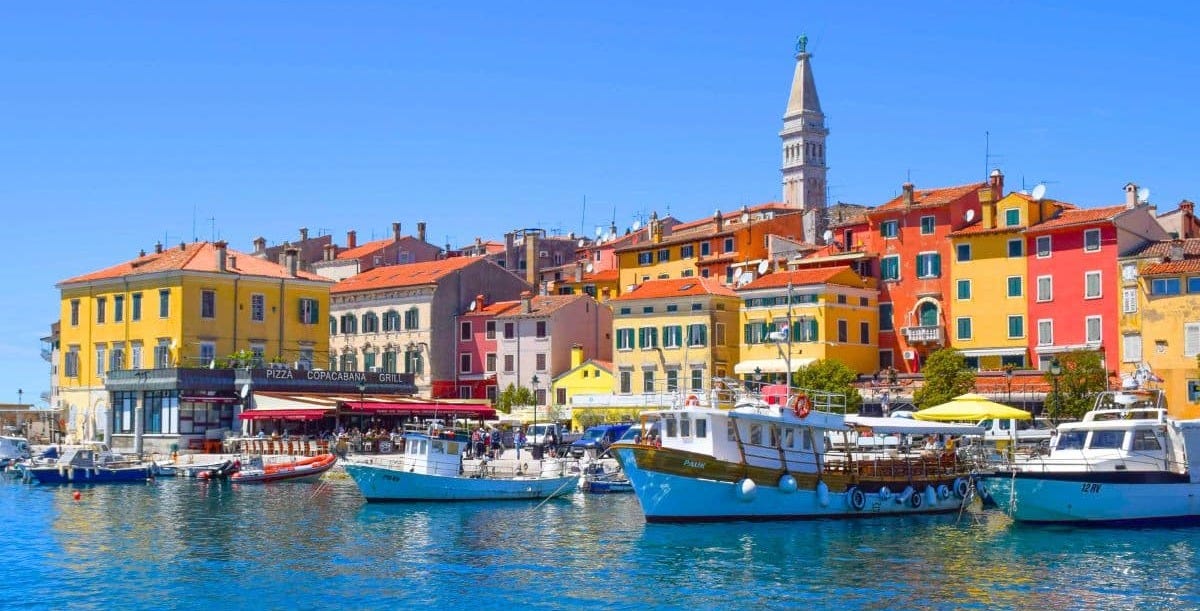
For two weeks, Rovinj became a dance paradise. People dancing in the streets, on the beach, everywhere. And she met Latinos from all over Europe — Sweden, Norway, Spain, France.
“The immigration pattern was supposed to be to the States,” she says. “And here were all these people who’d gone to Europe instead. And education was free. I was like, why did I pay $100k for university? I could have done this for free.”
On the plane ride home, sitting next to her friend, she said it out loud: “I don’t want to go back.”
Her friend laughed it off. “Yeah, but we have to.”
“Do we?” She asked.
And just like that, the decision was made. She didn’t belong in the US. Well, she didn’t know where she belonged yet, but she knew it wasn’t there.
She eventually chose Spain because she spoke Spanish and because she could come on a language assistant visa. She did her research — three years on that visa, then she could modify it to true residency if she found someone to sponsor her.
What she didn’t plan for was a pandemic.
She submitted her residency modification the Tuesday before the world shut down. Wednesday morning, Spain went into lockdown and then her back gave out.
She’d had a herniated disc from a car accident years earlier. In the US, doctors had given her 180 Percocets and told her to deal with it. She refused surgery at 27 because she didn’t want to be on an operating table every five years for the rest of her life, or worse, end up paralyzed. So she got fit. She worked out religiously. The doctor told her if she stopped, it would be ten times worse.
Then came COVID. Gyms closed. She couldn’t work out. The disc wrapped around her spinal column and pinched the nerves. She lost control of the left side of her body.
Her friend, who’d moved in with her during lockdown, lived through the agony of her friend crying herself to sleep from the pain.
“You have two choices,” her friend said. “I call an ambulance, or we call a cab and go to the hospital.”
They took a cab because Roamer 9 still carried the trauma of the medical systems in the US. She feared the bill that would be coming with an ambulance ride that a short cab could mitigate. But when she got to the hospital, the doctor was amazing.
He told her she needed surgery, but it was COVID, so they’d have to figure it out.
She began to panic. She was raised in a country where surgery meant financial ruin. She had already turned down surgery once in the US. And now not only was she being told it was her only option, but her family wasn’t around to be there for her. The doctor recognizing her fears put their hands on her shoulders and reassured her.
“You’re not in the US. You will be okay. You will walk again. We will take care of you.”
He put her in the hospital to wait — a controlled environment in case she fell or something went wrong.
“This would never happen in the States,” she says. “Like, never.”
In the States, they’d send you home to wait for surgery, with a handful of pills to numb the pain while you waited. No regard for what could have happened, all to make space and turn over beds as quickly as possible. Because someone laying in bed waiting doesn’t create high profit opportunity.
In total, she had two major back surgeries. She has a titanium back now. She paid for taxis, medicine, and a €500 corset. That’s it.
The day she went into surgery, she found out she’d been approved for residency.
“I remember thinking, okay, I’m gonna be able to walk again, and now Spain can’t get rid of me,” she laughs.
Finding housing was the hardest part. Madrid has a housing crisis, and she was competing with college students, language assistants, and international workers all arriving in August. On top of that, she had to get used to living in 25 square meters.
“A small apartment in Texas is a mansion,” she jokes. “Here, my apartment fits me and my dog. That’s it. My friends miss my brunches, but sorry, there’s no room.”
Most rentals in Spain come furnished — usually with grandma’s furniture. You inherit whatever was left behind. Nothing moves from its place in her apartment. It’s like Tetris. If something new comes in, something has to go out.
She vacuum-seals her winter clothes and stores them under the couch. Her heels live in IKEA bags under the sofa.
“The other day I was like, ‘Man, I gotta change my wardrobe out,’ and then I was like, ‘Oh, I really have become Spanish,’” she laughs. “In the States, you have a walk-in closet. Everything’s there year-round. Here, every space has a purpose.”
But the hardest part wasn’t the logistics. It was the emotional adjustment. The grief.
“Even if you’re moving because you feel like you belong somewhere else, there’s still this grief process,” she explains. “You’re leaving your family, your friends, your culture. And technology is great, but time zones are time zones.”
She’s lost people while living abroad — her uncle, a cousin who died unexpectedly. She didn’t get to say goodbye.
“I knew it was going to happen. I knew I’d lose people. But knowing it and living through it are different things.”
Spanish people are hard to befriend, Roamer 9 says this without judgment though. She says it’s just how it is. Kids go to school together from age three until university. Same 25 classmates for 15 years. When they finish school and come back to their city, they stick with those same people, even if they don’t really like them.
“It’s weird that your friends are your same friends from when you’re three,” she says. “Like, you can’t tell me you and Pepito actually like the same things and really get along. You’re friends because you’ve known each other since you were in diapers.”
So her community became other immigrants. People from Cape Verde, Guinea-Bissau, Angola. Dancers. Expats. The LGBTQ+ community.
“I think because they go through their own struggles, they understand what it feels like to be the outsider,” she explains. “There’s this empathy that comes from that. You have immigrant populations that really meld together with the LGBTQ+ community from this place of looking for belonging.”
These were the people who helped her through her surgeries. Her chosen family.
Ten years in Spain, and Roamer 9 still hasn’t spent a tenth of what her uncles spent on their US immigration journey 30 years ago.
She makes less money than she did in the States. But she’s comfortable. She has healthcare. She has access to education — Santander Bank gave her a year of Coursera for free just for being a customer. She can take classes on AI, marketing, whatever she wants.
“Spain recognizes that without immigrants, in 20 years, it’s going to collapse,” she says. “So they invest in people. Education and healthcare are priorities.”
Meanwhile, she watches what’s happening back home and feels vindicated in her decision to leave.
Her cousins on her mom’s side — the ones who’ve never been to Mexico, who consider themselves “American, not Mexican” — some of them voted for Trump. She’s blocked most of them.
“I had serious conversations with family members who were like, ‘I’m anti-immigration,’” she says. “And I told them, if you’re anti-immigrant, you’re anti my father. That’s a very serious line, and you’re crossing a line that I’m not okay with. And they’d say, ‘No, no, it’s all other immigrants, not your uncle.’ But that’s not how that works. That’s the same rhetoric as ‘all Black people are bad except for the Smith family down the street.’ That rhetoric was not okay for me.”
When she went home last May for two and a half weeks, she couldn’t wait to leave.
“I just wanted to go for a walk, and they’d be like, ‘No, it’s not safe.’ I can walk my dog at 2 a.m. here if I want to. There’s no comparison.”
A month and a half ago, she got laid off. Her company was purchased, and she was the highest-paid, newest person on the team. It was cheaper to let her go.
She could’ve panicked. Instead, she launched a company.
It’s designed to help people navigate the emotional and cultural side of moving abroad. Not the legal stuff — there are plenty of companies doing that. But the stuff nobody talks about like the grief of leaving, the panic of landing in a new country and thinking, “Oh shit, what did I do?” The first time you have to go to the doctor and you realize how traumatized you are by the US healthcare system.
“As immigration becomes easier, and it is becoming easier, people need support through the human side of it,” she explains. “The conversation with your family. The decision about what to pack. The loneliness. The oh-my-god-I-love-everything followed by the oh-my-god-I’m-so-alone.”
What She’d Tell You If You’re Thinking About It
“Be real with yourself about why you’re moving,” Roamer 9 says. “Is it adventure? Is it professional? Is it identity? And are you really prepared?”
If you’re really close to your family and they’re not okay with your move, it’s going to be hard. If you don’t have family, your friends become your chosen family, and losing that closeness, even with FaceTime and WhatsApp — is a real loss.
“Technology is great, but time zones are time zones.”
You’ll go through waves. The honeymoon phase where everything is amazing. Then days 31-60 when you’re like, can I go to a bar by myself? Can I sit at a restaurant alone? Where do I find the products I love?
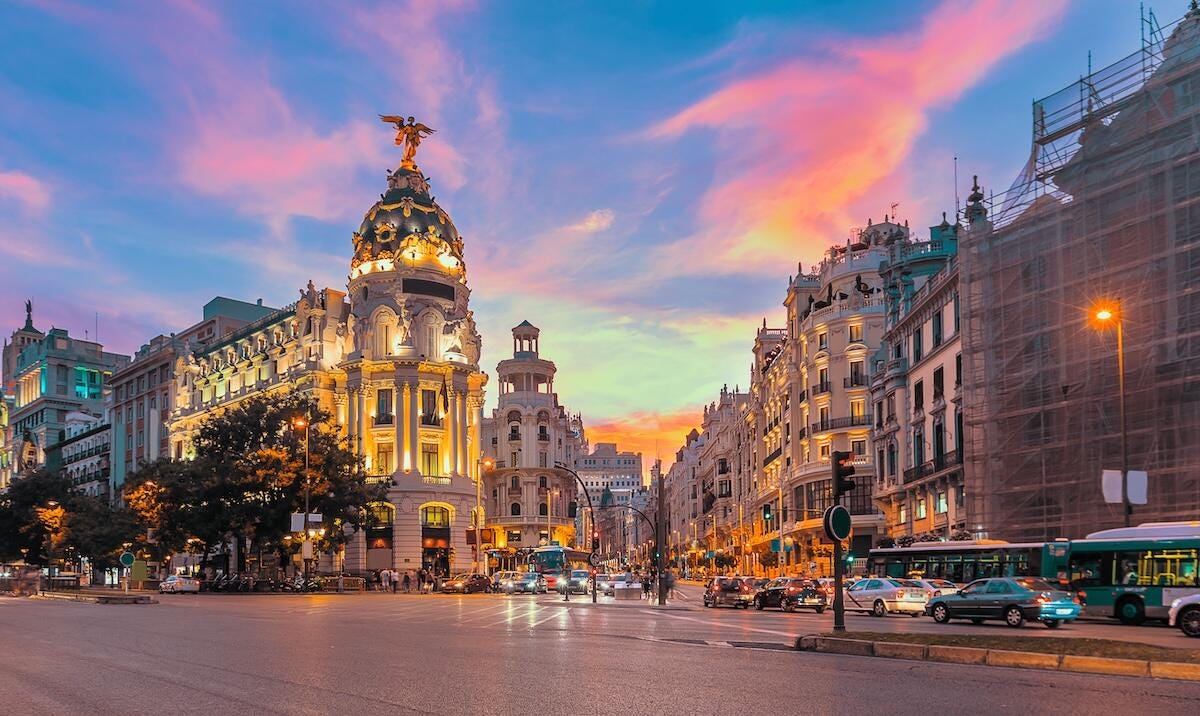
When Roamer 9 first moved to Madrid, she couldn’t find Mexican products anywhere. Making corn tortillas from scratch cost €15 for just the flour. She was like, maybe I don’t want tortillas that bad.
Now she has a place that makes them fresh. “Where there’s a will, there’s a way,” she says.
Roamer 9 isn’t the girl in stilettos anymore, the one who could chase down high school kids in heels. She’s the woman with the titanium back who dances salsa in Madrid and builds businesses from scratch and knows what it means to bet on yourself when home stops feeling like home.
She’s the one who came with a suitcase and a backpack and figured out the rest as she went.
And when I asked her if she’d do it again, she didn’t hesitate.
“I don’t belong in the States,” she says. “I knew that ten years ago, and I know it even more now. I make less money, but I’m comfortable. I have access to healthcare, education, community. I have a life. That’s not something I ever had back home.”
For anyone thinking about making the leap — whether it’s to Spain or anywhere else — Roamer 9 story is proof that you don’t need to have it all figured out. You just need to be honest about why you’re going, prepared for it to be hard, and willing to find your people when you get there.
The thing nobody tells you about moving abroad is that it is not really about running away. It’s about running toward the version of yourself that couldn’t breathe where you were.
And sometimes, that version of you is waiting on the other side of the world, in a 25-square-meter apartment, with a dog and a community of other people who get it.
Sometimes, that’s exactly where you’re supposed to be.
While this is true for all your Roamers, Sydney, that remark about Spain supporting immigration raises a big point. It's more than just the USA that is going to need people from the outside to keep going. A lot of countries are fighting such people off but that's national suicide.
Great story…with so many take aways. But for Roamers if there is a will then there is a way, a life anywhere is possible.