


Roamer 8 is from New Jersey, in the US. He’s 28 and he’s spent years working with nonprofits and humanitarian organizations, trying to turn that into a career that never worked out.
He couldn’t find opportunities in the US. Neither could he find community, funding for his nonprofit, or even get responses to job applications. So he saved money by working a seasonal job for three months. And with what he saved—an amount that technically puts him below the poverty line in New Jersey—he moved to Mexico City, and he’s been comfortable for nine months.
“If I’m able to make dollars in one way or another and spend in pesos, that’s great. I can show up to Mexico with what I make in three months, and I have enough to live comfortably for a year.”
He got involved with nonprofits and humanitarian organizations as a teenager—youth outreach, homeless shelters, and church missions. Latin America attracted him specifically. He knew people from there, and he’d been practicing Spanish for years.
In 2023, he went to Colombia for three months, funded by donations. He absolutely loved it, but then everything fell apart. “I was kind of just ghosted and ditched by different organizations.”
It kept happening with religious organizations especially.
“I don’t go along with things that I would identify as toxic, abusive, manipulative behavior. I called out a lot of those things and I wrote a book recently about my experiences.”
He went through what he calls “religious deconstruction,” and when that happened, he lost a lot of community locally.
“I tried to get involved with different nonprofits here in the Jersey, in New York, and Philly areas. But nobody ever responds to applications.”
He has a degree, he has experience, and he speaks Spanish, but no one in the US would hire him.
He also never found opportunities for dating in Jersey. Probably connected to the other two things.
“I was in religious circles, so I never had a consistent, regular person job, which is often necessary for dating.”
So the push factors stacked up:
No job opportunities related to what he wanted to do.
Lost community after religious deconstruction.
No dating prospects.
No funding for his nonprofit.
“I was like, okay, I don’t really have opportunities here.”
So worked to save enough to live in Mexico during most of 2024. And in December, he showed up to Mexico City with a backpack and a bank account.
He worked at a hostel and made connections with locals and internationals. Then he found a place for $200 a month in cash.
“I’m a minimalist. I have enough to live comfortably for a year on what I made in three months. I’m technically living below the poverty line in terms of New Jersey. But I can show up to Mexico with that and it’s like, oh, okay, I have enough.”
He also always wanted to be in Latin America. “Really friendly, really kind people in Mexico. Generally pretty welcoming. Beautiful country and nice weather.”
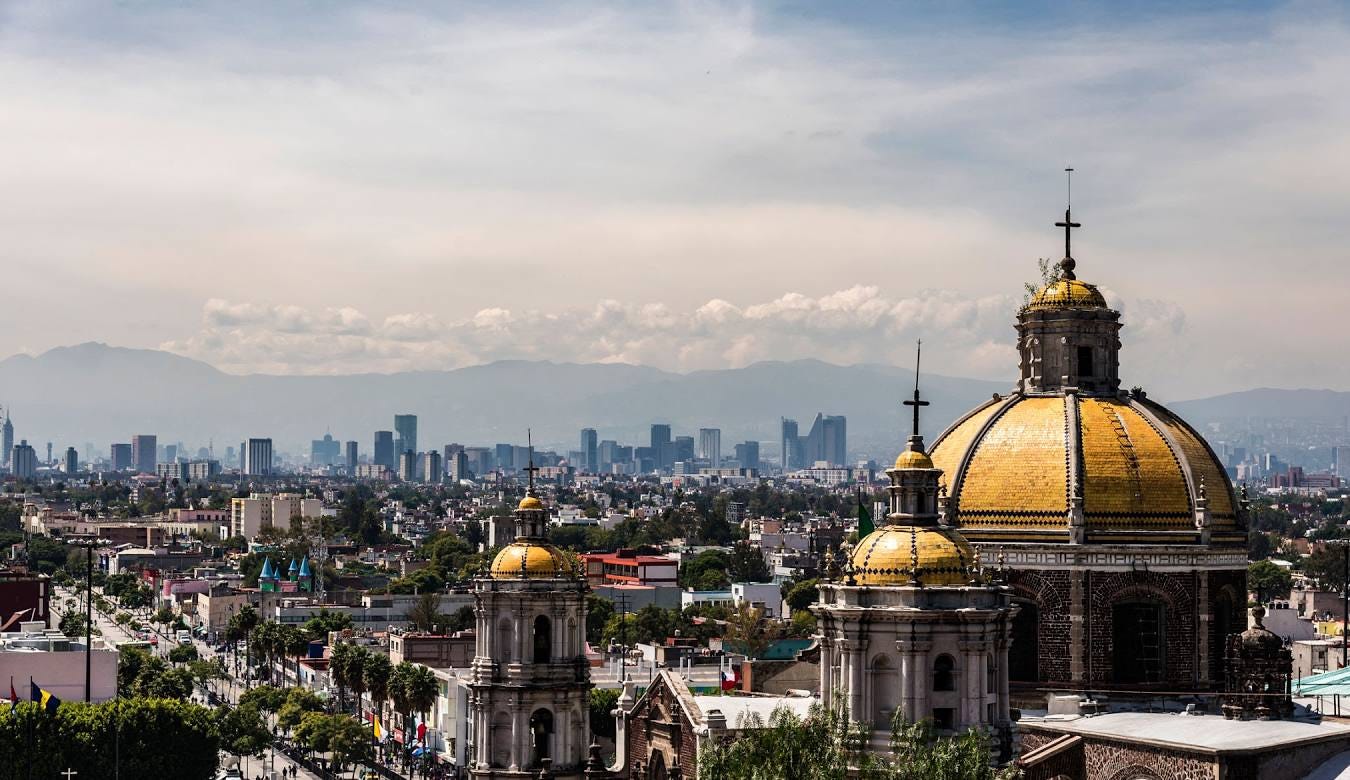
The cost of living is significantly lower, but the biggest pull is the community. “I’m able to access more community there in Mexico City. I don’t feel like I have that in the US.”
And then he met his girlfriend. She’s from Mexico City. “She’s been awesome.”
So now he has:
A place to live for $200/month
A community he didn’t have in Jersey
A girlfriend he loves
Enough money saved to be comfortable for a year
Roamer 8 said that one thing that makes Mexico easier than other countries is proximity.
“It’s close to the US geographically, but also culturally. If I showed up somewhere more culturally different—like Sub-Saharan Africa, much of India—that would be a lot more difficult.”
Mexico and the US are economically connected. So many people live on both sides of the border. “This is not a huge jump like it would be for some other places.”
And because he has a US passport, the visa process is simple. “I can show up with a US passport, a backpack, a bank account and I can be there for six months.”
When his six months were up, he went to Guatemala for a week. Then re-entered Mexico.
Right now, he’s there as a tourist. But he’s trying to get legal residency.
The options are: job, university, or marriage.
“Usually the easiest is marriage, if you don’t have a job or university or enough income.”
To get residency without marriage, he’d have to show $50,000 annual income, but he doesn’t have that. “Perhaps we’ll get married. People do that—both legitimate marriages and fake marriages. Some people get married on Friday, get divorced on Monday to a local.”
He plans to do it legitimately though. “I hope I can get legal residency this upcoming year. Mexico doesn’t allow you to just keep coming in as a tourist most of the year. They’re pretty lenient with US citizens, but still.”
He’s not too worried about the paperwork. “Mexico loves paperwork. But it seems relatively easy if I have a little time and a guide from people who’ve already done it.”
There’s one challenge he didn’t expect: xenophobia.
“In general, people are very kind and welcoming. But there are a lot of people in Mexico City that have extreme hate and xenophobia. The ‘go back to your country’ sort of attitude.
He sees it in the US too—Americans saying the same thing to Mexicans.
But in Mexico City, the divide is generational. “The older generations are very welcoming. ‘Oh, that’s so great you’re here! Welcome! You’re basically Mexican now!’”
But Gen Z? “They’re pissed off at people that come from the US with dollars. We’re able to access a better life than they can, even if we’re working the same job. We’re making multiple times the amount.”
On July 4th, the American Independence Day, there were anti-American protests in Mexico City. The signs read things like “Fuck gringos. Go back to your country. We don’t want you here.”
There’s vandalism around the city too. “The Americans are the enemy. Lynch Americans. Make soup with their corpses,” with the graffiti written in English and Spanish.
He gets it, to an extent. “It’s largely a reaction to the bigger picture of colonialism and systemic issues. But also primarily right now because of the current US government.”
Still, in day-to-day life, no one’s ever treated him poorly. “Often, they think I’m French for some reason.”
“If I showed up with zero Spanish, that would be difficult. You can access things because there are tourists. There are people who speak English. But in terms of getting along with locals, Spanish is important.”
He learned a lot being there and broadened his vocabulary. But there’s another thing that made Mexico easier—familiarity.
“I’ve lived and had friendships and neighbors with Mexican folks all my life.”
So even though he’s in a different country, it doesn’t feel completely foreign.
“I feel like I have a general familiarity with this.”
Though he notes: Mexicans in the US are culturally different than those in Mexico City.
“Mexico City folks are more educated, and more progressive politically.”
He’s staying in an area that feels like Brooklyn in New York City. “I can walk everywhere. I felt safe everywhere I went in Mexico.”
Part of that is privilege. “I was probably in bubbles that were more touristy, even though I went to areas that weren’t. But also because of privilege—being a six-foot-one, straight, white American man. That helps.”
Still, the US pushes narratives about Mexico that don’t match reality. “The US puts out a lot of ignorant shit about a lot of countries. For people who don’t ever leave, it’s easy to believe. But people who leave are like, ‘I’m never going back.’”
Right now, he plans to stay in Mexico long-term.
“I have a great community and a girlfriend. I intend to be in Mexico long term should things work out.”
But if the visa process were easier, would he consider another country?
“Yeah, I absolutely would. I could name a couple dozen countries I’d be happy to go to.”
He went to Mexico largely because of proximity—culturally, economically, geographically. And because entry was easy.
“I don’t feel like I have enough money to go to a lot of places, and the entry process was easier here.”
He mentioned that his great-grandparents came from Italy.
“The population of Italy is declining. But the Italian government is raising the barrier to entry for people from the Italian diaspora. If they wanted responsible working adults who aren’t criminals to enter, I would go.”
Japan came up too.
“I’m aware of demographic changes happening in a lot of countries. If they needed people like me, I’d consider it.”
What strikes me most about this interview is how straightforward it is.
He couldn’t find work in Jersey that aligned with what he wanted to do, he lost community after leaving evangelical spaces, and he couldn’t afford to live comfortably in the US.
So he saved money for three months and moved to a place where that money could last a year.
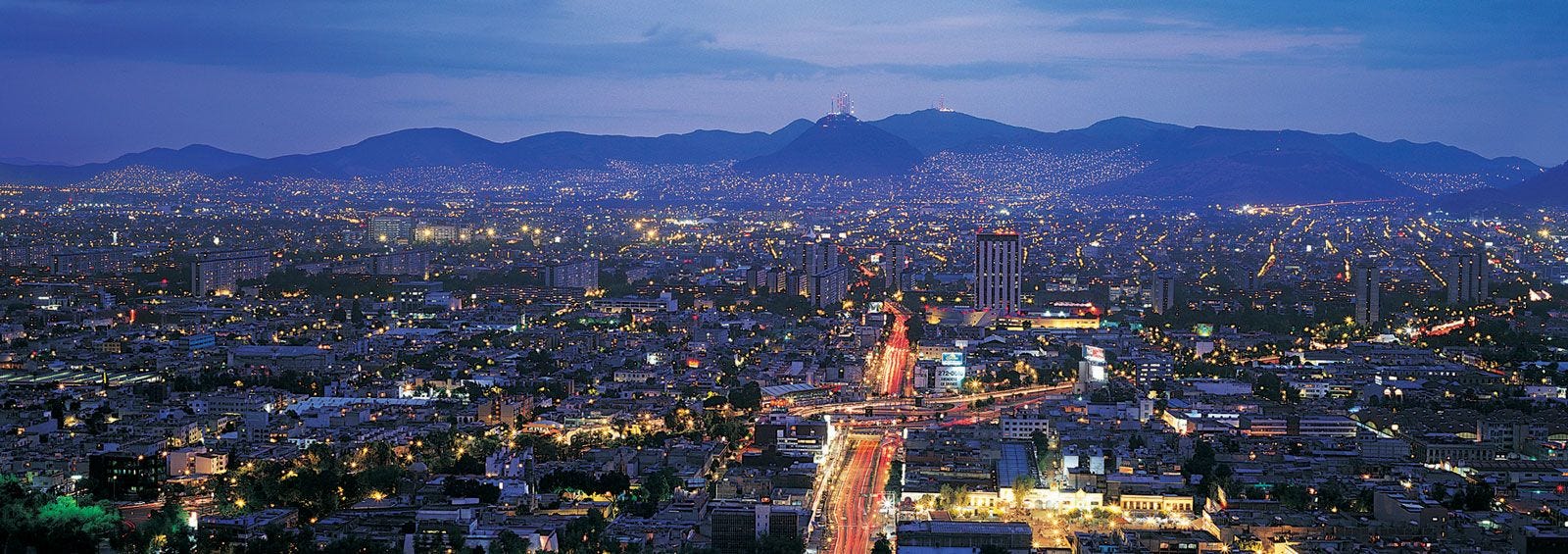
He’s not wealthy. He’s below the poverty line by US standards. But in Mexico City, he’s comfortable. He has a $200/month apartment, a girlfriend he loves, community he didn’t have in Jersey, and enough savings to not worry.
All because the exchange rate works in his favor.
He’s also the first Roamer to explicitly name his privilege: “I’m a six-foot-one, straight, white American man. That helps.”
Roamer 1 through 7 all faced different barriers. Visas, money, scams, bureaucracy, fixers charging 10x, and separation from children.
Roamer 8’s biggest barrier is the Anti-American graffiti that he sees but doesn’t experience personally.
That’s the difference a US passport makes when you’re moving to Mexico. No visa applications, no waiting, no proving you have $50,000 in an account. Just: show up, stay six months, leave for a week, come back.
Easy.
Some people fight bureaucracy at every step. (Roamers 1, 2, 3, 4, 6, 7)
Some people move freely because they have EU passports. (Roamer 5)
And some people move freely because they have US passports going to certain countries. (Roamer 8)
The system isn’t neutral. It’s built to benefit certain people and block others.
Roamer 8 didn’t need fixers or lawyers. He didn’t need to prove he had $50,000 in the bank or marry someone for papers.
He just needed a US passport and a backpack.
And because he has those things, Mexico is accessible in a way it wouldn’t be for someone from the Philippines (Roamer 7) or Russia (Roamer 2 and Roamer 6) or Kazakhstan (Roamer 3).
The question isn’t just “how do we make moving easier?”
The question is: “why is it already easy for some people and impossible for others?”
Next week: Roamer 9.
Roamer 8's story struck a chord with me on the religious angle. East TN is dominated culturally by a lot of churches, especially the Southern Baptist Conference. They also did a lot of missions to Central and South American countries when I was a kid. On the surface, it's all welcoming and "family". But you call out the BS like Roamer 8 did, you're froze out completely.
Hate that he went through all that. But I'm glad he's in a better spot now too.
Great story, Sydney!