


Roamer 6 left Russia when the war started and her translation business collapsed overnight, but unlike the others, she didn’t describe it as hard.
“The hardest part was that I had to decide,” she said.
“I always wanted to live outside of Russia. Like since I was a baby.”
When she was four or five years old, Mexican telenovelas were huge in Russia. She’d watch them with her grandmother.
“I literally said, ‘Okay, when I grow up, I will marry a Mexican and we’ll have a hacienda.’”
She laughed, her eyes pulled up in each corner. She looked genuinely happy. Almost at peace.
“Well, I’m about to marry a Mexican. No hacienda yet. But we do have time.”
Her mom worked for an American law firm in Moscow. The boss was American, living there with his family. She grew up with his kids, so English was always part of her life.
“At some point I fantasized about one of my mom’s American colleagues getting married to her and taking us to the US or something. That didn’t happen. She did remarry, but it was a Russian guy.”
She dreamed big about living somewhere else. About trying herself out outside of Russia.
Then she fell in love in Moscow, had a baby, and stayed, like so many people. But the dream never went away.
She speaks six languages because she once worked as a translator and interpreter. She had her own business—not a huge company, just her and a couple people she’d outsource to when things got busy.
She was making very good money before the Russian-Ukrainian war started. “I realized there would not be so many opportunities to make money. Not so many people want to work with Russia anymore.”
This is the second time I’ve heard this. Roamer 2 had shared the same concern of what being Russian meant for her in the job market.
Roamer 6’s business dried up and the work disappeared. “So I packed and came here to look for new opportunities.”
She wanted to move with her husband and their son. But her husband didn’t want to move, and he didn’t let their son go with her.
“So I moved on my own, and that was the hardest part.”
She’d been realizing for years that she and her husband weren’t good for each other anymore. But actually leaving—actually putting distance between herself and the situation—was still hard.
“At first it was hard. But then I realized it was actually a good thing. Seeing the big picture, zooming out a little, I realized that was the best decision I’d ever made.”
Her son is still in Russia. He hasn’t visited yet because he’s not 18—the legal age in Russia.
“I think his father is afraid he will want to stay.”
She’s always spoken Spanish to her son since he was born, even though Spanish isn’t technically her native language. “It’s the language of my heart.”
Her son is bilingual, and she thinks if he came to Mexico and liked it, he’d just say, “Hey, I’m staying with Mom. I’m going to school here tomorrow.”
So his father won’t let him visit. Not yet.
She didn’t plan extensively. “I moved in one day. I packed my stuff, and then the next day I was here.” She only took one suitcase, and one backpack, with the basics.
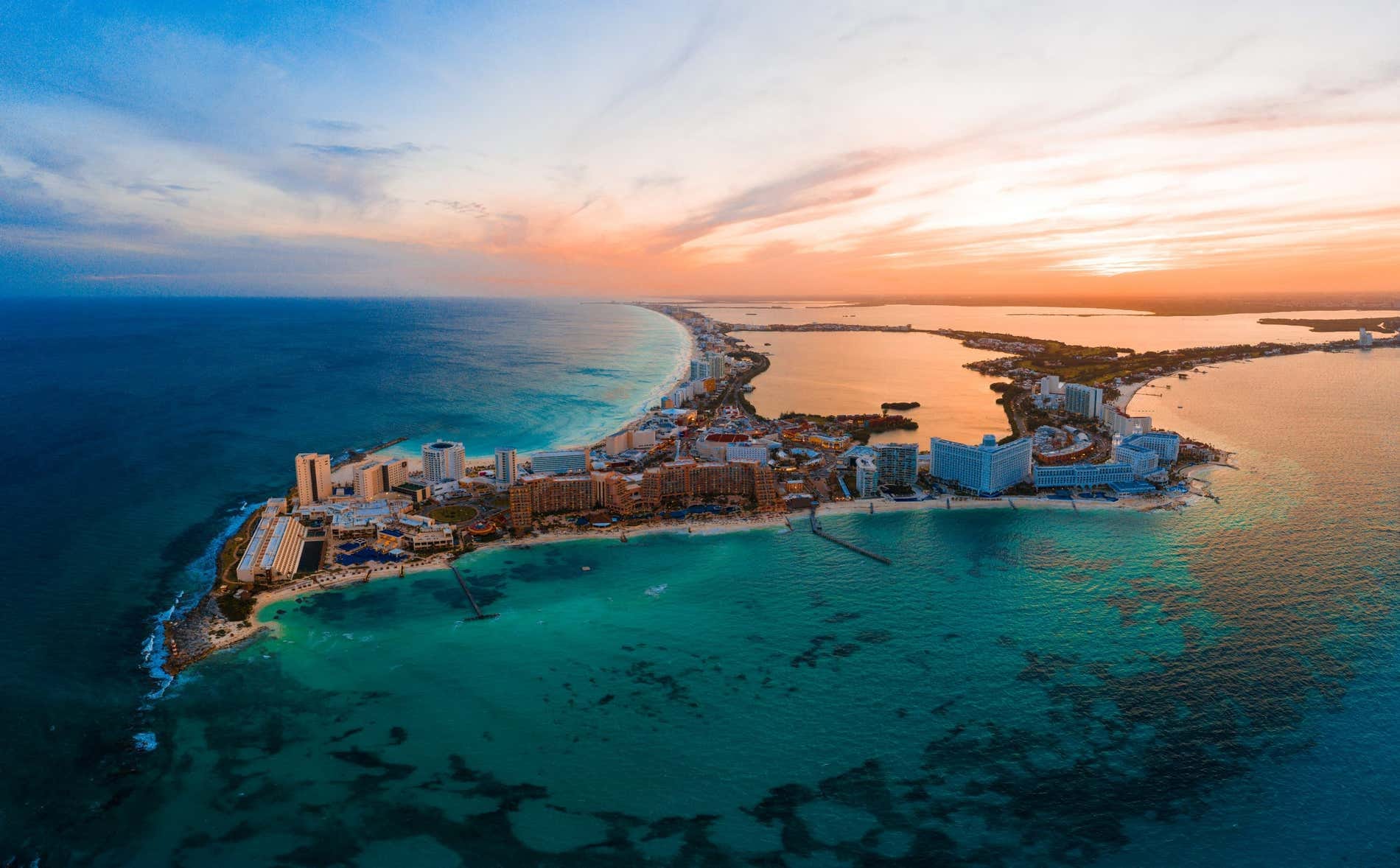
She knew it wasn’t cold in Cancun, so she didn’t need winter clothes. Though now, she says, she’s freezing in December.
“All my friends and family say, ‘Wait, are you sure you’re from Russia?’”
And then, she said, it was like a movie.
“Like the universe helping you with everything. It felt like destiny.”

She found money on the street within the first couple hours of arriving, found a job in a couple weeks, a place to rent, met her first best friend—a local woman at her first job, met her second best friend a year later playing volleyball on the beach, and met her fiancé around the same time.
“Everything just kind of fell into place naturally.”
It wasn’t all smooth, though. She dealt with con artists twice.
The first time, they made her papers. But it turned out the paperwork wasn’t 100% legal. She had to start from scratch. The second time, they said they could help her get political asylum. That didn’t work either.
Now she and her fiancé are waiting to get married so she can get her papers through him. “Right now, we’re saving money. The marriage for foreigners is more expensive than for Mexican citizens. We have to save about $400 just to get married. No rings, no dress, no big party. Just the documents which costs about 5,000 pesos.”
The con artists were recommended by people she knew. That’s what made it worse.
“When I first moved here, I got a job at a company—an office of an American company. This guy said, ‘Oh, I know this lady in Playa del Carmen. I think she can help you with your documents.’ I don’t think he even realized it was a scam until I mentioned it to other people and they said they didn’t use her because of visa difficulties.”
Her first employer paid for the initial paperwork. But because she went with the cheaper option, she ended up having to redo everything.
She didn’t have a detailed plan when she arrived.
“There’s a huge group of Russians in Mexico on Facebook. I joined that one.”
That’s where she found most of her jobs. That’s also where she looks for services—manicure, plumbers, whatever she needs. But she doesn’t have close friends from the Russian community in Cancun.
“Most Russian women who are here are mostly moms of babies. We don’t have the same schedule.”
She knows people, and goes to events sometimes, but it’s not a close friendship.
“My first best friend’s family literally adopted me. I’m with them for all the holidays, all the hurricanes, everything. Her grandmother screens all my boyfriends. She calls them and says, ‘You know what? If you ever hurt her, you will deal with me.’”
When I asked what advice she’d give to other people moving, she said: “Just be open to people. Be warm to them. Treat people the way you want to be treated.”
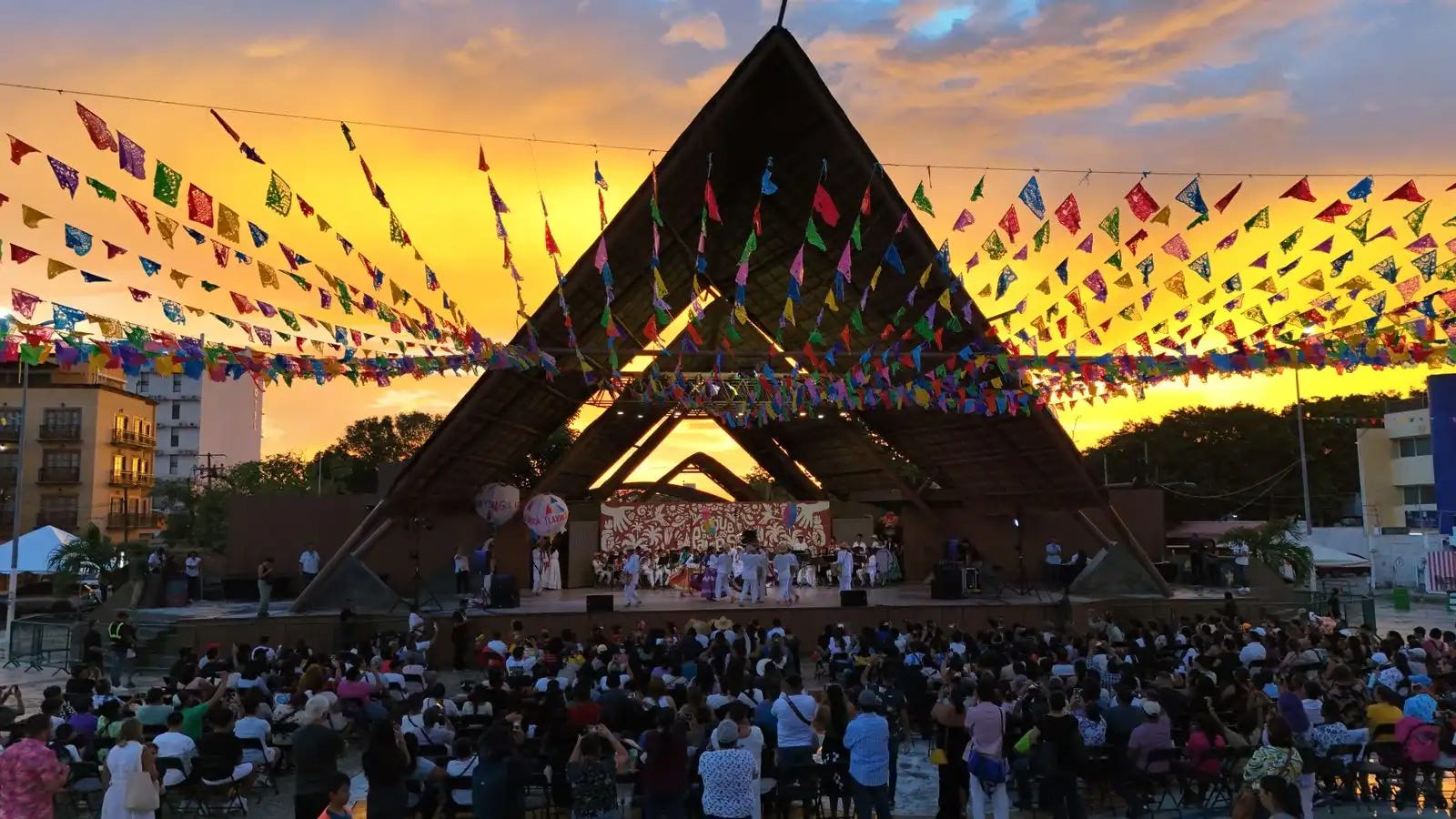
She said Mexicans are very open and warm. They will adopt you—if you let them.
Her friend’s family is proof. But that kind of belonging doesn’t come from Facebook groups or expat forums. It comes from showing up, being genuine, and letting people in.
I asked if she could go back in time, what would she do differently. She said she’d research immigration lawyers more carefully.
“I would have explained to my first employer that some lawyers charge double but they’re reliable. I don’t think he would have minded that or the cost. Instead of getting scammed twice.”
I asked if she’d ever think about leaving Cancun.
“With my fiancé, I could go anywhere. He’s my soulmate. If he says, ‘Let’s go anywhere,’ I’d go.”
She paused.
“Well, preferably not Russia. I don’t want to go back there. Fortunately, he doesn’t want to live there either.”
Maybe they’ll visit so he can meet her family. But just for two weeks. A month, tops, she explained.
She wouldn’t want to move somewhere colder. But if there were good opportunities, if they thought it was a good idea to start over somewhere else—maybe.
“Maybe in a few years when we have kids, we’d move to Mexico City. They say schools are better there. But it’s not a matter of tomorrow. Maybe like five to seven years at least.”
Mexico is her home base now.
“I’d like to travel. We both want to travel a lot. Right now we don’t have as much of a budget. But in the perfect world, we’d travel the world and see stuff.”
I keep trying to figure out what made roamer 6 experience feel so different.
Is it personality? Is she just more optimistic? More adaptable?
Is it timing? Did she happen to land in Cancun at exactly the right moment?
Is it the Mexican culture? The warmth she described—the way people adopted her immediately?
Or is it something else?
Maybe she always knew she was leaving. It wasn’t a question of if. It was just a question of when.
She’d been dreaming about it since she was four years old watching telenovelas with her grandmother.
She’d been preparing for it her whole life without realizing she was preparing.
So when the war gave her the final push, she didn’t have to wrestle with the decision. She just had to go. Maybe when you’ve been ready to leave for your entire life, the actual leaving feels less like trauma and more like relief.
Everything else worked out—the job, the friends, the fiancé.
But her son is still there, and that’s the grief she carries.
We understand the people who stay. We know how to name that choice. It’s responsible. It’s noble. It makes sense.
But Roamer 6 made me wonder about the opposite kind of pull — the kind that doesn’t disappear just because responsibility is present.
What do we do with the people who feel something so strong toward another place that it outweighs everything tying them where they are?
What do we call a woman who leaves, not because she doesn’t love her child, but because something in her knows she will disappear if she doesn’t go?
Is that selfish? Is it brave? Is it something we don’t yet have language for?
Six interviews in, and some people like Roamer 6, describe the move as destiny and the universe conspiring to help them.
But even in the easiest stories, there’s loss. Even when everything falls into place, something gets left behind.
For Roamer 6, it’s her son.
For Roamer 1, it was her identity as a New York realtor.
For Roamer 3, it was the feeling of belonging she still doesn’t fully have in France.
For Roamer 4, it was an entire American life he had to kill before he could build a Mexican one.
There’s always a cost, even when the universe is helping.
Next week: Roamer 7.
Love love these roamers stories, thank youu!🖤
Indeed, with big moves like your Roamers are doing, Sydney, NOTHING is free. But as Roamer 6 proved, it also need not be a hardship. Her work as a translator likely did much to smooth things over.
I do fear for her son. Stories I keep hearing out of Russia get grimmer by the day. It might be a blessing that he's not legal age yet, as there's a good chance he could have been shipped to the Ukraine front line. May he reunite with his mother soon.