


The third interview complicated the pattern.
Roamer 1 moved because staying was killing her. Roamer 2 moved because something inside her had been whispering for years that she needed to get out.
Roamer 3 moved because she visited France once and realized: “Oh, this isn’t unreachable. This is just life.”
She went on a three-month internship/language stage program at a restaurant in the South of France. It was by the mountains and the sea. They covered housing and food. So, she brought her best friend.
She thought she’d go back to Kazakhstan after, but being there dissolved something about “the myth of living abroad.” She realized it wasn’t some mystical other dimension—it was just people going to work and buying groceries. People like her.
“When you’re in your country, you think it’s so far away, and unreachable. Then when you come, you realize it’s the same life here. Maybe a little bit different, but still the same.”
That realization changed everything—and also set something in motion that she couldn’t fully see yet.
Her first three months in France were perfect. The restaurant she worked at paid for her housing—a little house in a campsite. They covered her food, and she had her best friend with her. The South of France was gorgeous, and the people were kind.
“Even as ordinary as it was, it was magical. Like a fairy tale. I couldn’t even believe I was there.”
She wasn’t thinking about the logistics or long-term plans. She was just experiencing it, and somewhere in that experience, she started thinking: “I could actually live here, even though I have no money.”
She decided to look into it. Part-time work could cover rent, the government offered housing assistance, and universities had support programs. So she went home to Kazakhstan for a year, and started preparing her documents. She passed the exams and applied through Campus France for a student visa.
And then she came back.
The second time she arrived in France, everything was different. There wasn’t a campsite house, no more meals covered, and she was all alone.
She had to find her own apartment and pay her own bills. “I realized nobody cared about me,” she said. “I had nobody here.”
The first year was spent in a depression. Not dramatic—just heavy, lonely, and constant. She wanted to go back to Kazakhstan. She couldn’t understand why everything felt so hard when the first stay had been so easy.
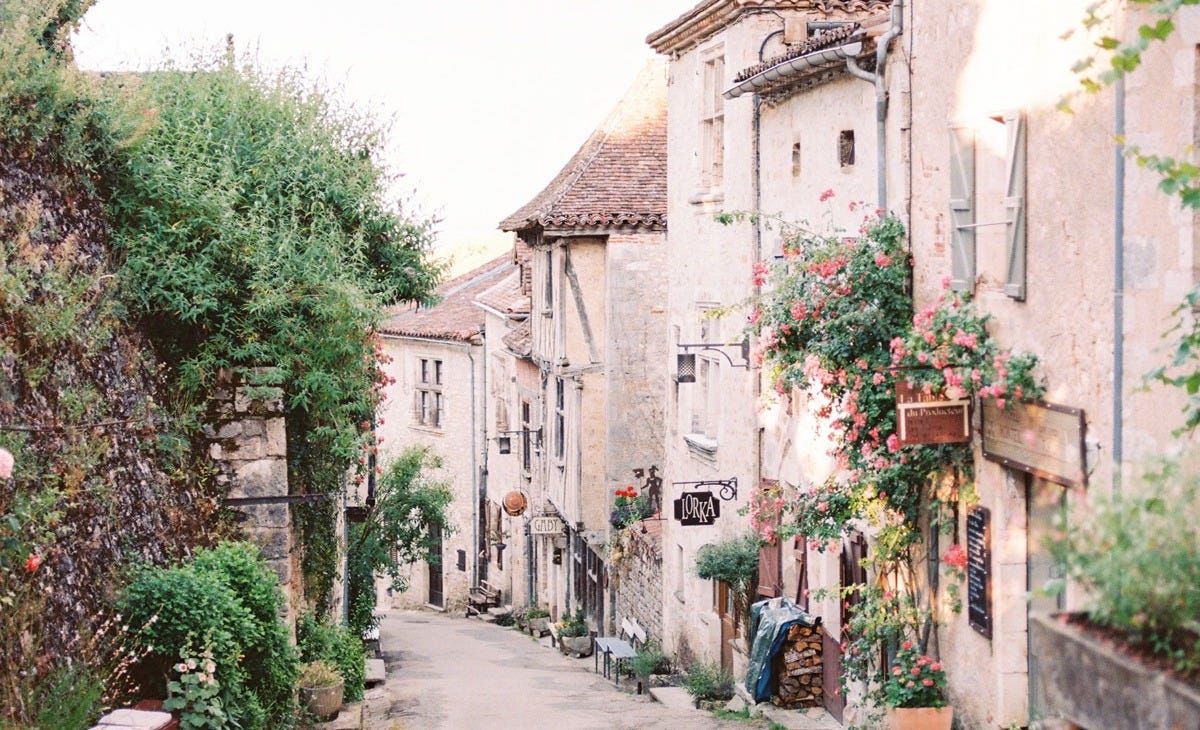
What she didn’t realize yet was that the first stay had been a bubble. Everything was handled, so she never had to learn how to hold herself up there.
The second stay was real life. And real life, it turns out, is lonely and confusing.
Getting to France the second time wasn’t as simple either. She’s from Kazakhstan, and Kazakh passport holders need visas to enter Europe, for any length of time. She doesn’t have the luxury many people with “stronger passports” take for granted. For her first trip (the three-month internship/language stage), she applied for a visa and got rejected twice.
“We think there’s this stigma at the embassy,” she said. “Like if you were declined once, maybe you’ll always be declined.”
By the time she applied for her student visa, she was terrified they’d refuse her again. But they didn’t. They approved it in two weeks.
“They see your intentions and your documents—or maybe you’re just lucky that time. For the first time, it was just an internship, so maybe they thought I’d stay illegally. But the second time, it was for studies. Much easier.”
Still, the fear lingered. The stress of waiting, and the not-knowing. “It’s not that hard to apply,” she said. “But the waiting and the stress…that’s the hard part.”
When she came back as a student, she needed to rent an apartment, and she found it impossible.
“I was really lucky because I had a French friend,” she said. “When I was here the first time, I met this French guy. He became like my best friend and he helped me with everything.”
He found her the apartment, handled the paperwork, and dealt with the landlord. “Without him, I don’t know what I would have done.”
But even with help, there was so much she didn’t know:
How to open a bank account.
How to pay electricity bills.
That you have to call the utility company to put the contract in your name.
That if you move out and don’t cancel the contract, the charges keep running.
That even as a student, you have to file tax declarations.
How to get a SIM card. Which phone plan to choose.
None of these things are hard on their own. But when you don’t know they exist, they stack up fast.
“There are a lot of things like this—administrative things—that I would have liked someone to tell me.”
This was five years ago. Back then, there weren’t many influencers or content creators explaining life in France. She followed two girls on Instagram and read every single post they made. That was her entire guide. “Otherwise, I just had to go somewhere and ask someone.”
She sees things changing now. Now, there are more resources, eSIMs, more expat groups, and more information.
But she still thinks people want something different: one clear, step-by-step system. Not scattered advice across Instagram accounts and Facebook groups.
“Literally, step by step. Once you arrive, here’s what you do.”
Her first year as a student was in Poitiers and she absolutely hated it. “It’s not a great city for international students,” she said. “I was depressed the whole year and I wanted to go back to Kazakhstan.”
So, she applied to transfer to another university and got accepted to Strasbourg.
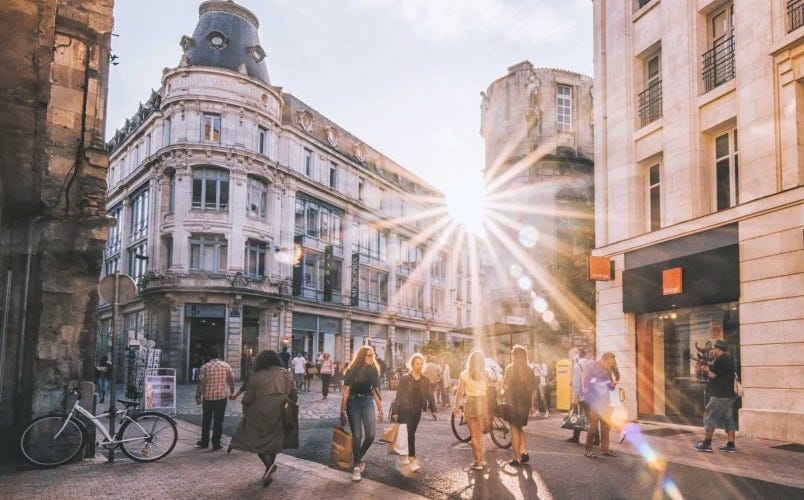
Everything changed—not because her life became easy, but because it finally felt survivable.
“Strasbourg is one of the most beautiful cities. It’s so different from Poitiers. I realized maybe it wasn’t just me. Maybe it was also the surroundings. The whole atmosphere.”
Same country, and a completely different experience. She also met her now-husband around that time. He is a French man, and they got married. She ended up staying in France. But she made it clear to me that it wasn’t just the relationship that made her stay. It was the city, the timing, and finally not feeling so alone.
“It’s not for him. It’s because I moved to Strasbourg. The city changed so much for me.”
She speaks fluent French now, she knows the cultural codes, she’s married to a French man, and she has a residency permit. By every measurable standard, she fits in, but she still doesn’t feel like she fully belongs.
“When I’m with Kazakhs, I feel like I’m home. Like I’m with my people. We understand each other, even if we’re speaking English. It’s just... easier.”
She misses that—the feeling of not having to explain herself. Of shared context. Of instant recognition. Her family visits once a year, and she goes back to Kazakhstan once a year, but it’s not the same as being there.
“I miss the feeling of belonging,” she said. “And my family.” She didn’t say it like something that would go away. She said it like something she’s learned to live with.
One thing she discovered later—something that helped her a lot—was a French government employment program. They assigned her a mentor. Someone who helps with job searching, navigating websites, and understanding how the system works.
“The whole system in France helps you find work. I never experienced that in Kazakhstan.”
But she didn’t know it existed for a long time, and she wonders how different that first year might have felt if she had. How many other people are out there struggling, not knowing there are programs designed specifically to help them?
I asked her the question I’ve asked everyone: if you knew how hard it would be, would you still do it?
She paused.
“I say yes every time. But then when I remember my mental state the first year... It was so horrible. I don’t know.”
Then she added: “But I am happy with where I am right now. So yes, I would do it again. But I would definitely do some things differently.”
And then she said something that made me realize how much has changed in just five years.
“Nowadays it’s so much easier to find information, ask people, and join groups. Back then there was nothing. Right now, if I had the chance to move abroad again, I would do it because I know there are so many tools and platforms I could use, and so many people I could ask.”
What struck me most about this interview was how simple the turning point was.
She didn’t have a crisis or a breaking point. She just saw that life in France was possible. Being there for three months gave her permission to imagine a version of herself living there permanently, and once she could imagine it, she could plan for it.
But the fairy tale doesn’t prepare you for real life. The first stay—with everything handled, with her best friend and the magic of newness felt easy and beautiful.
The second stay, she was alone, and responsible for everything. It almost broke her. She survived because of one French friend who helped with housing, transferred to a better city, met someone who became her husband, and found a government program that gave her a mentor.
But what if she hadn’t had that friend? What if she’d been stuck in Poitiers? What if she’d never found out about the employment support? How many people don’t make it past that first year because the scaffolding disappears and they have no one to catch them?
Three interviews in, and the pattern is getting clearer. The hardest part is the drop—the moment when the program ends, when the internship is over, when the university stops holding your hand, when you wake up one morning and realize something…
“Nobody is responsible for me now, except me.”
That’s the moment a lot of people break.
Roamer 1 had it happen in a hospital bed.
Roamer 2 had it happen on her first morning in a new city—spinning, like a terrible hangover.
Roamer 3 had it happen when she arrived for year two and realized the fairy tale was over.
And all three of them survived because of one thing: someone who stood next to them and said, “I’ll help you figure this out.”
One person. That’s often the difference.
Laura didn’t fail. She stayed. She built a life.
But she survived because the right things lined up—a friend, a city, a mentor—not because the system made it easy to find them. Not because the system made it easy to stay.
That’s what I keep thinking about now… how many stars never align, and how many people quietly go home believing they just weren’t strong enough?
Next week: Roamer 4.
Sounds like having a Sherpa to a new country to navigate from the initial pitfalls is a common thread of the Roamers to reduce the stress and friction of the “drop”. - Roamer 3 said it’s easier now. What type of tools / sites would make it easier now?