


Europe is a dream for most people. We watch it on the internet— neutral tones, high-quality leather, and timeless silhouettes. Europe is relaxed, sun-drenched, and romantic, heavily popularized by internet trends like “Euromaxxing”.
There’s long, leisure lunches, sipping espresso in cobblestone piazzas, enjoying seaside towns, breathable linens and vibrant coastal colors. Like I said, a dream.
But if you actually have a conversation with the person living that dream, the reality is a lot less “Eat, Pray, Love” and a lot more “paying a lawyer to figure out which government office is holding your life hostage.”
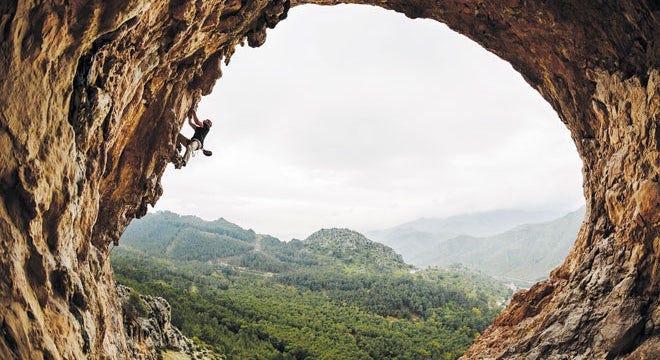
Recently, I had the chance to chat with Roamer 20, an American remote worker and avid rock climber who moved to Spain two and a half years ago. Her story upends the usual digital nomad narrative. She didn’t move for the tax breaks, and she didn’t move to find herself. She moved for a man. Specifically, a German climber she met in Mexico. When the logistics of getting him a US visa proved impossible, they started looking at Europe. Portugal was on the table, but then Spain dropped its digital nomad visa. Combined with world-class climbing, the choice was made.
But as Roamer 20 quickly learned, choosing Spain is the easy part. Actually getting permitted to stay there is a completely different sport.
The first thing you need to know about Spanish bureaucracy is that it doesn’t care about your timeline.
“The bureaucracy is insane,” Roamer 20 told me. “It’s slow. There’s like a mafia that has bought up all the appointments for fixers. You almost have to hire a lawyer because they know who to pay off to get you appointments in the time you have before your visa runs out.”
Beyond the black market for appointment slots, the legal process is a maddening web of catch-22s: you need Document A to get Document B, but you can’t get Document B without Document A. Because her partner was an EU citizen, her lawyer skipped the standard digital nomad route and pointed her toward a “pareja de hecho” (a domestic partnership). The ease of this process depends on where you plant your feet. In Barcelona, the process was shockingly relaxed—they barely asked for proof that the couple knew each other. But it still required signing leases, navigating local laws, and hiring an army of professionals.
“I have never worked with so many lawyers and gestores (legal assistants) in my life,” she laughs. “I had to get one for the pareja de hecho, one to change the German plates on our car to Spanish plates, a gestor for taxes... it’s so overwhelming.”
The Reality of Spanish Driving
If you think you can just cruise through Spain on your American driver’s license forever, think again. After six months, you have to get a Spanish license. There is no simple exchange protocol; you have to take the actual Spanish driving test and it is notoriously brutal. The written exam is difficult, the tiny historic streets and roundabouts are stressful, and to top it all off, you have to take the practical test in a manual car. For Americans raised on automatics, learning the “lost art” of driving stick while trying not to clip a stone wall on a driving exam is kinda hard.
While her brother chose the high-rent, bustling life two blocks from the Sagrada Família in Barcelona, Roamer 20 and her partner went the opposite direction. They tracked down a house in Arbolí, a tiny village of just 70 residents, famous in the global climbing community for its stunning surrounding cliffs.
They found the place through idealista (Spain’s version of Zillow) and a local climbing guide. Because of the built-in trust of the climbing community and a good lawyer to review the paperwork, they managed to score a unique rent-to-own contract.
But life in a 70-person village comes with distinct trade-offs:
The Pros: Rent is far cheaper than the big cities. You get a big yard, the roads are beautifully maintained, and the community is tightly knit. You also have world-class rock climbing & endless community fiestas
The Cons: There is no local market. The nearest grocery store is down a steep hill. Going down takes an hour; hiking back up with heavy grocery bags takes two.
Then, there are the cats. Spain has a large population of free-roaming street cats, and Arbolí handles them with charm. A local group of women dubbed “Gatbolí” (a play on the town name and the Catalan word for cat, “gat”) ensures the town’s 30-odd stray cats are fed, healthy, and cared for. Roamer 20 even ended up adopting two rescue kittens herself. “They are the light of my life,” she says. “And honestly, they are the main reason we committed to buying the house.”
What About The Taxes?
Like many Americans, Roamer 20 wasn’t initially a fan of high tax rates. But living in Spain flipped her perspective on what social infrastructure should look like. “I used to not be a huge fan of higher taxes. I understood theoretically what they were for, but in the States, I never felt them benefiting me. Here, where the taxes are high, I see where it goes. I get healthcare, I contribute to a Social Security system that will actually be livable when I’m older, the roads are beautiful, and there’s a community fiesta in our tiny village every few weeks. I see how I benefit, and it makes me not mind paying them.”
Because of her heritage, she’s currently eyeing a faster track to permanent residency and Spanish citizenship. Spain offers an accelerated timeline (often within two to three years) for citizens of formerly colonized nations, including the Philippines. By securing her Filipino citizenship first, she can fast-track her Spanish citizenship without being forced to renounce her US passport—a loophole that protects her remote income and her ability to easily visit friends back in LA.
The Final Verdict
Does she miss things? Of course—good Asian food, authentic Mexican food, and the friends she left behind in California.
But going from the hustle and bustle energy of Los Angeles to helping a tiny village take care of 30 stray cats has given her a sense of peace and community she didn’t know she was looking for.
“I am so happy that I made this move,” she says. “I keep wanting everyone I know in the States to do the same.”
Just make sure you find a really, really good lawyer first.