


When we talk about packing up our lives and moving across an ocean, we treat relocation like a problem to be solved with better systems, or more streamlined paperwork. In fact, my thesis in process design is built around that exact premise: that one day, moving halfway across the world should be as friction-free and simple as moving just one town over. I’ve lived in France, backpacked across many places, and right now I’m looking at the lived pain and the beautiful, messy reality of global relocation to figure out how to bridge that gap.
But if you sit down and talk to the people who are actually on the ground, you quickly discover that human lives don’t always cooperate with clean design. Take Roamer 18, a 60-year-old American expat currently living in Porto, Portugal. She didn’t move abroad with a safety net or a family entourage. She did it all by herself and three years into her journey, she is living through a bureaucratic purgatory that would make most people throw in the towel. Yet, her story is an incredible case study in what it actually takes to survive an international move.
Early in our conversation, Roamer 18 dropped a piece of wisdom she had picked up from a guest on her own podcast. When people move abroad, they generally fall into one of these two things: they are either running from something, or they are running to something. She noted that when people run from, they tend to either keep running or go back. But when they are running to something, the move sticks more. A lot of expats flee their home countries out of sudden political reasons or economic frustration, but Roamer 18’s pull to Europe wasn’t a sudden knee-jerk reaction to modern American life. It was a slow-burning, lifelong obsession that began when she was just nine years old, when her parents took her and her sister on a trip to France. Her sister was 16 and already fluent in French, making France her “place”. Roamer 18, at nine years old, became obsessed with the broader idea of Europe—a whirlwind castle tour in her little kid memory that planted a permanent seed.

For decades, she worked, saved every penny, and traveled to Europe every single year, hunting for the exact place she might want to settle. Ironically, Portugal wasn’t even on her radar; she had spent ten years researching Costa Rica, Ecuador, and other places in South America. But when the pandemic hit and she realized she could happily live on much less, she stumbled across Portugal’s D7 residency visa—possibly through an article in International Living magazine or an online forum—realized she qualified, and jumped at it. Because she was running toward a lifelong dream rather than just sprinting away from a nightmare, her roots dug in deeper when the storm inevitably hit. She didn’t experience the traditional grief or regret over what she left behind in California. If anything, her only grief was that she hadn’t left sooner.
Born and raised in Los Angeles before escaping to San Francisco for college, she realized she never truly fit in or found a real support group there.
To prepare for the huge change, Roamer 18 actually moved into a van for an entire year, traveling all through the US. She wanted to see her own country first, knowing she might never be able to do it again, and knowing that she could never afford to live in California again anyway. Navigating the initial D7 visa bureaucracy while living in a mobile van was a challenge in itself. She was constantly hunting for printers in places like Tennessee while managing paperwork on the move. But that was nothing compared to what waited for her across the Atlantic.
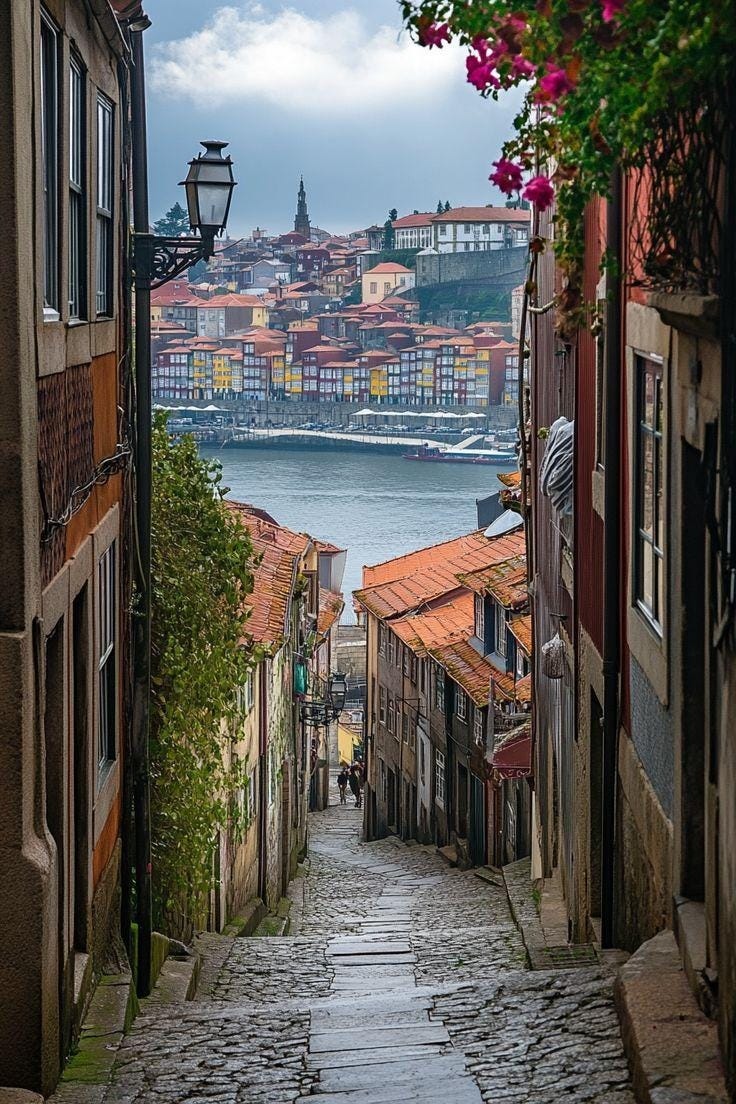
There is a distinct demographic shift happening in the expat world. While younger families often move with a history of global mobility and know what to expect, a huge portion of retirees and older adults in Roamer 18’s age group are moving abroad having never lived outside their home country before. They are deeply well-traveled, but travel is a consumer experience; living somewhere is an act of raw survival. When Roamer 18 arrived in Porto, the aesthetic fantasy of European living collided violently with everyday reality. She spent her first four months living in expensive AirBNBs before luckily finding her current apartment. But the first year was incredibly rough. Locked behind a heavy language barrier and lacking any local help, she struggled with basic, everyday tasks. She couldn’t find a grocery store, she couldn’t find furniture, and she didn’t know how anything worked. When she shared these vulnerable struggles on her YouTube channel, the internet comment sections responded with predictable cruelty, calling her “the stupidest person on the planet” and an idiot.
On top of the isolation, she encountered a biting, rainy Porto winter that she was completely unprepared for. She had read all the warnings about Portuguese winters, but chose a route of pure denial, refusing to believe any of it. But, looking back, she recognizes that denial was a necessary survival mechanism. If she hadn’t been in denial about a lot of the hardships, she might never have made the move at all.
However, the real test of resilience isn’t the cold weather or the missing grocery stores; it’s the dizzying, often terrifying world of foreign bureaucracy. Three years into her life in Portugal, Roamer 18 is facing a massive administrative nightmare: her residency visa has been expired for a solid year. During her stay, Portugal underwent a massive systemic restructuring. Their original immigration agency, SEF, which was run by the police, was completely dismantled after a tragic incident where officers beat a Ukrainian citizen to death at an airport. Because Portugal is a small country—roughly a third of the size of California with a fraction of the population—a structural crisis like this shook the system to its core. The government put its foot down and dismantled the agency, creating a brand-new entity called AIMA from the ground up.
The transition has been absolute chaos. The new agency hired staff who had no idea what they were doing, and the entire system stalled. In the middle of this mess, Roamer 18’s paperwork disappeared. AIMA lost her passport information, and she recently received an email stating they had lost all of her other tracking data as well. She currently exists on a legally extended slip of paper that is valid for six months from August, meaning she has only three months left for a final determination. While Portugal has a track record of extending deadlines and has never actively kicked anyone out, the psychological toll is immense. The major restriction is that if she leaves the country or crosses the border out of the Schengen Zone, she might not be allowed back in.
For a year, she lived in a state of high anxiety, staring at her four-year apartment lease, her car, and her rescued Portuguese dog, wondering if she would suddenly have to sell everything, throw her dog in the car, and flee to a non-Schengen country. How do you survive that kind of systemic instability? You don’t do it with design or technology. You do it through a radical shift in mindset. Roamer 18 reached a point of pure “fuck it” surrender, learning to let go of the unknowns and realizing that if things don’t work out, maybe it just means something better is waiting out there.
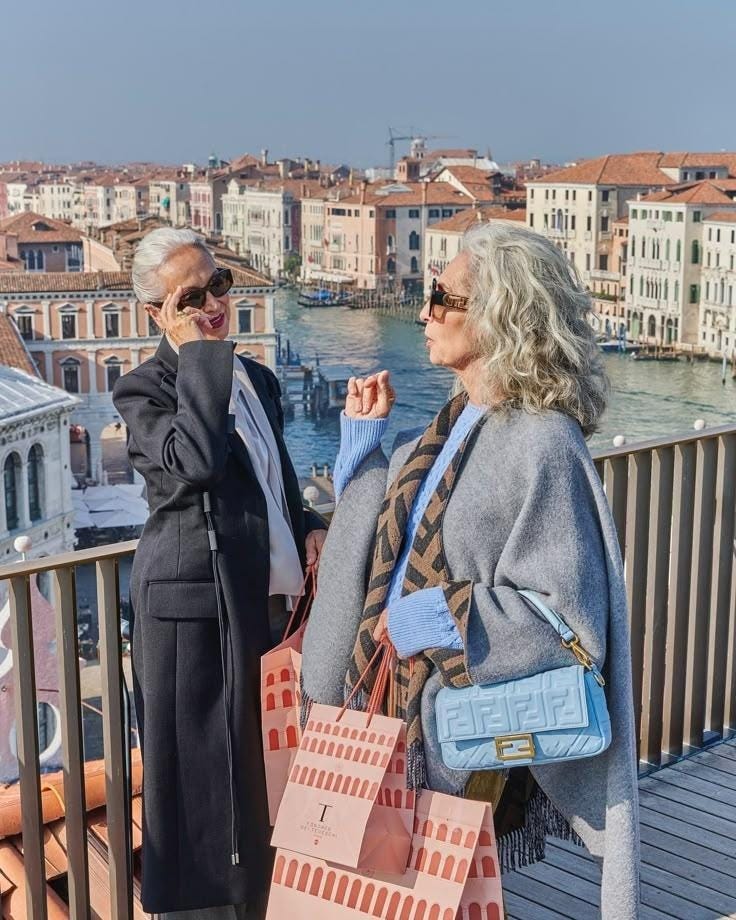
When shit like this happens, your only real safety net is human connection. During that brutal first year, Roamer 18 went through a successive gauntlet of personal trauma. She suffered severe health issues, broke her fingers so badly she completely lost the use of her hand for a year, and received the devastating news that her best friend back in the United States had passed away. She was isolated, physically broken, and grieving. But she survived because of a low-fi,organic digital artifact: a local vegan Facebook group. In a beautiful twist, she discovered that the expat community in Portugal was far less dogmatic than what she left behind; in California, you’d practically “be shot” if you weren’t a strict vegan trying to join a vegan group, but in Porto, the group was open to vegetarians and meat-eaters alike.
Through this group, an organic community began to form around her. When she couldn’t use her hand to cook or even take out her own trash, people stepped up to help. Total strangers and local Portuguese neighbors came over to cook for her and handle her chores. The Portuguese culture of neighborliness completely blew her away—if you are sick, people will actually bring you soup. This stood in sharp, painful contrast to her life in Los Angeles, where she was once stuck sick in bed for three days with her water completely shut off due to a neighborhood leak, and every single person she reached out to for help responded that they were simply “too busy.” This is the hidden variable that data-driven relocation apps and immigration guides can never truly quantify. Real community isn’t built loudly or instantly through an app interface. It is built slowly, quietly, and through small, serendipitous moments of vulnerability. A fellow expat actually discovered Roamer 18’s vulnerable videos on YouTube, reached out to her, and they became close friends. Recently, they served as each other’s accountability partners to finally attend an InterNations meetup website event together, discovering a whole new layer of local support systems, WhatsApp groups, and expat meetups.

Perhaps the most inspiring takeaway from Roamer 18’s journey is her refusal to let bureaucratic stagnation dictate her sense of agency. She loves Portugal—particularly its world-class, compassionate healthcare system which she views as a vital anchor for her old age—but she refuses to be a victim of its paperwork. If her residency visa is ultimately denied by AIMA, or if shifting geopolitical landscape rules alter her passport status, she already has Plans C, D, E, and F fully mapped out. She is entirely prepared to embrace the nomadic lifestyle of the “Schengen Shuffle,” meticulously tracking her days to spend 90 days inside the EU and 90 days out. She is eyeing the Netherlands via the Dutch-American Friendship Treaty (DAFT) visa, which she fully qualifies for. Albania is currently her number-two backup destination, a pivot from her original pre-move interest in Bulgaria, and she even keeps Cambodia on her radar as a long-term wildcard backup, though navigating pet relocation logistics for her dog makes Asia a bit more complicated. If there wasn’t a war active in the region, Georgia would be high on that list to
When Roamer 18 first left America, her sister—who had moved to France back in the late 90s without the benefit of the internet, cell phones, or digital support groups—gave her one piece of non-negotiable advice: “Whatever you do, just make it through the first year. Do not come back. Stick it out for at least a year, and things will get easier.”
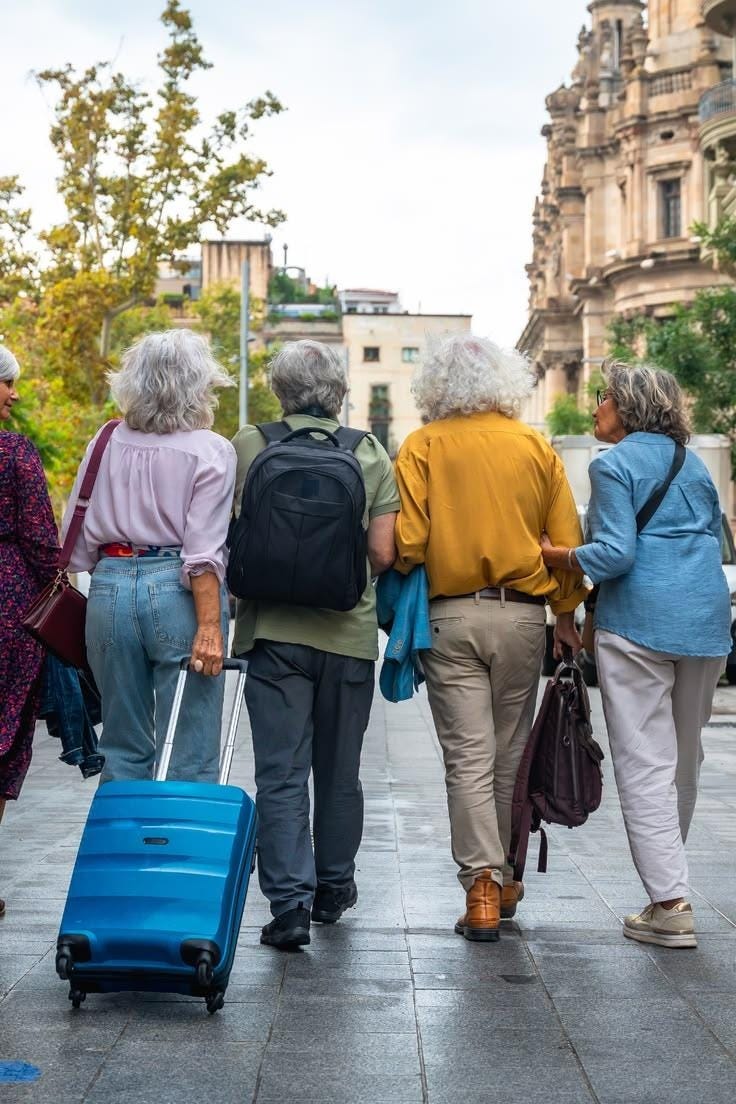
Roamer 18 took that advice to heart. She realized that once you survive the first year, the language barriers, the physical isolation, and the realization that no one is coming to hand you a map—you unlock an unshakeable self-reliance. Roamer 18’s journey proves that when you have a strong enough pull toward a life of meaning, an open heart for community, and a willingness to pivot on a dime, the world has a funny way of making room for you.
The Roamer series is an ongoing collection of interviews with people who have moved abroad, what drove them there, what the process actually cost them, and what they found on the other side.
God gives you the next step, not the whole path. If you saw all the pain and pruning ahead, you might quit before you became ready for the blessing on the other side.