


Roamer 17 has a simple explanation for every major decision she’s ever made—Love.
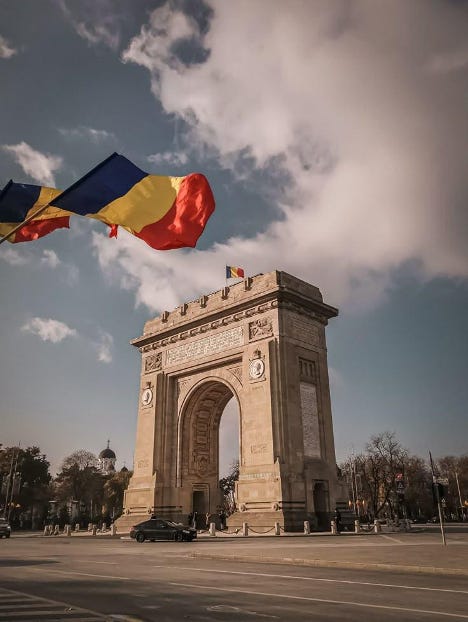
Not romantic love exclusively, though there’s plenty of that in this story. Love as the thing that moves you, pulls you somewhere new, makes you look at a map and think “why not.” She left Romania for Italy at 22 because her boyfriend decided he was going there for work and, one month later, she decided she was following him. She left Italy for Spain for another man. She’s planning to leave Spain for Costa Rica for a relationship that’s been running across four years and two continents entirely over a screen.
Every time, people probably thought she was being impulsive. But she thinks she was being exactly herself.
Milan, 2008, with nothing but a language degree and a boyfriend
She’d studied English, French and Italian since she was a child, which made the decision to move to Milan feel more logical than it probably was. Speaking a language and living in it are two different things and she found that out quickly.
“It doesn’t matter how much you study. Until you live there and interact with people in their own language day after day, you don’t realize what it is to actually speak a foreign language.”
She was 22 or 23, fresh out of university with barely a year of work experience, surrounded by Italian and figuring it out in real time. She had no contacts, no job and no established life. Just a boyfriend who’d gone ahead and a decision she’d made in a month.
The job search was hard. Finding housing was harder. But something kept happening that she hadn’t fully expected: people were kind.
Her first rent in Italy came through an act of generosity she still talks about. The landlords had a daughter roughly her age who had also moved abroad. They looked at Roamer 17 — young, foreign, without the deposit — and decided to help her because they hoped someone would do the same for their daughter someday.
“Starting with that, it gives you confidence in people that actually don’t speak your mother language and still can be good to you.”
She was young, inexperienced and, as a woman alone in a foreign country, more than a little afraid. That one act of kindness from strangers built something in her that didn’t go away. She believes that what you put out into the world is what you get back.
She also has a theory about why kindness feels rarer now than it used to. It’s not that people are worse. It’s that they’ve stopped seeing each other.
“People don’t interact face to face anymore. Everything is done through Facebook, through the internet, through phone messages. It’s all very impersonal. You need to hear the person. You need to see the person to feel and get on the same vibe. Otherwise I think it’s impossible.”
Italy to Spain.
The relationship that brought her to Milan eventually ended. Then came another man, and another country. She moved from Italy to Spain, and the cultural whiplash was immediate.
Milan was different. The architecture, the fashion, the way people dressed and carried themselves felt elevated.
Spain was different too. “People are less elegant. I used to live in Milan, where it represents the elegance and high couture of everything — the buildings, the dressing, the perfumes, the makeup and hair. And you come here and you live a kilometer from the beach.”
She’s careful not to frame it as a criticism though. Spain has things Milan doesn’t — 300 days of sun a year, the sea always in view, a warmth in people that Italy’s politeness didn’t quite replicate. But the loudness was an adjustment. The lack of privacy. The way strangers would greet her with three kisses on the first meeting, which felt completely foreign to someone from Romania, from the Balkans, where physical affection between people who don’t know each other simply isn’t done that way.
“Everything is very loud, very there in front of you. No privacy. Just people kissing each other all day.”
Eight years stuck, and then a 30-kilometer drive that changed everything.
She settled in a town on the Spanish coast because that’s where her partner’s sister lived. She got her residency there, found work there, built her entire life in one place and then stayed for eight years, long after the reasons that had brought her there had dissolved.
Two years ago, she looked at her rent, looked at the town, and made a decision. She drove 30 kilometers down the coast to a place she’d never been, where she knew nobody, and moved.
The difference was striking. Spain’s coastal towns have distinct personalities shaped by the nationalities that have settled in them — English here, German there. Her new town had German roots. They were organised, clean and quiet. On Sundays, even the motorcycles were electric. People rode bikes in silence. The contrast with where she’d been was almost comic.
She’s 43 now and she says she likes it. “I’m 43. I like my peace and quiet now. I’m done. I’ve done a lot.”
The language is always the hardest part
Roamer 17 speaks Romanian, English, French, Italian and now Spanish. She arrived in Spain without knowing anything about the language. Her first task after that first summer was getting a driving licence, which required passing a written test she couldn’t yet read.
She walked into a driving school and asked for the manual. “They said, can you speak? Can you read? No. So how are you going to do it? I said, just give me the manual. I’ll figure it out.”
A year later, she had her license.
This is her consistent approach to every barrier the moves have thrown at her. It isn’t easy, but she figures it out.
She’s also spent years traveling alone through the Canary Islands, Austria for a lake she found on Google Maps, Bonn just because of something she read about Beethoven’s house, Switzerland, Germany.
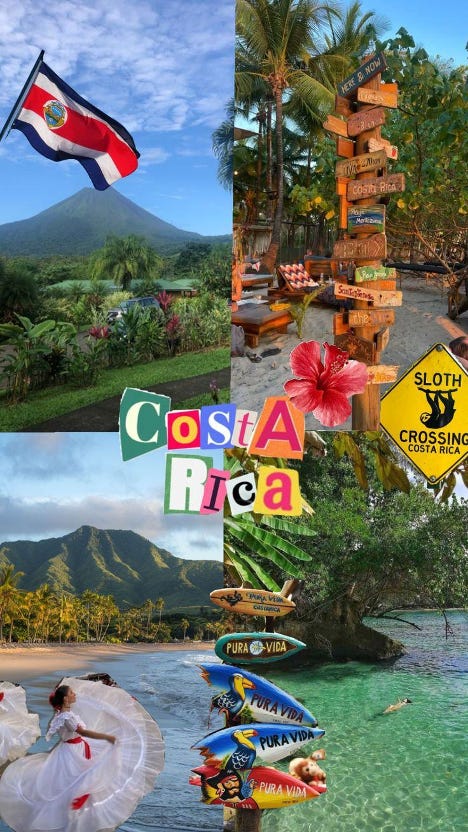
Roamer 17 has been drawn to Costa Rica for a while. The “pura vida” philosophy(pure life) resonates with something in her and also the fact that the country abolished its military in 1948 and has lived without one ever since. And something more personal: she was adopted at three years old, grew up with more than many children could ask for in a lifetime, and has decided that the next chapter needs to involve giving something back.
She wants to open a language school for children. She speaks enough languages to teach several of them, and she has the kind of life experience that makes her understand what it means to get to somewhere new without the tools to communicate.
“I received more than a lot of kids could ask for in this lifetime. So I decided I want to give back to the kids.”
What she’d tell anyone thinking about doing any of this
Roamer 17 doesn’t dress this up. The language barrier is hard, there’s lots of paperwork and you feel lonely when you get to somewhere new. She’s cried through bureaucracy, rebuilt from scratch more than once, and spent years in a country she moved to for a man who wasn’t there anymore. But she’s never once seen any of it as a mistake.
The people who helped her along the way — the landlords in Milan, the colleagues who taught her things through Google Translate, the strangers who were kind when they didn’t have to be — those are what she carries. She tries not to think about the relationships that ended or the bureaucracy. She thinks about the kindness that made her survive through it all.
Roamer 17 is a Romanian expat who has lived in Spain for over a decade, having previously lived in Italy. She is currently planning a move to Costa Rica, where she intends to open a language school. She is one of many expats interviewed as part of an ongoing project exploring what it really takes to build a life somewhere new.
Cracking story, Sydney!
This story lingers with you long after you’ve finished it, quietly reminding you how life unfolds and how, at times, you must face it alone... Not because you were compelled to, but because you consciously chose this path driven by a desire to explore, to discover yourself, and to understand the world on your own terms...What makes it truly remarkable is its rare ability to mirror real life so authentically, offering insights that feel both profound and practical...I genuinely admire your writing it's nothing short of impeccable.🤌🏻🙌🏻🫶🏻🍀🤍