


Roamer 15 did everything he was supposed to do. He got good grades, graduated at the top of his class and landed a graduate scheme at a five-star hotel, rotating through every department for two years on a management track. The career was building itself exactly the way it was supposed to.
But, suddenly, he stopped and looked around. He was living in his childhood bedroom because he couldn't afford to pay rent anywhere in England. You need two salaries for that now, most of the time. Also, most of his university friends had scattered to different parts of the UK or abroad. His job meant weekends, late nights and a growing feeling that he'd studied business but ended up somewhere he didn't actually want to be. None of it felt right.
"I just fancied a complete change."
He calls it a core life crisis. He had to reckon with the fact that the life he'd built on paper wasn't the life he wanted to live. So he left.
When he was a kid on a family holiday in Venice, he watched his parents skip the gondola ride they'd talked about for years because they had waited too long and their bodies couldn't do it anymore.
"They spent their whole life saying they were going to go to Venice and do it. But they waited too long. Their bodies were too old and too frail.”
So, when 2025 brought the loss of a few important people, he realized life is short.
When it comes to careers, he doesn't really believe in them anymore. At least not in the traditional sense. Especially when the previous generation's playbook which was start at the bottom, work your way up — no longer applies. People are going to be working until 70 anyway. If you have 40 years of work ahead of you, he figures you can afford to start your career at 30 instead of 22. Which means your 20s are for something else.
"I think you should take a bit of risk in your 20s."
Roamer 15 had savings. He was living at home for years, so he'd built up a cushion, a safety net sitting untouched in a bank account back in England.
"I wanted to do the move and challenge myself with only the bare minimum — around 4,000 British pounds. Surprisingly, I've managed to make it work."
That choice was intentional. Authenticity is something he cares about deeply and he didn't want to move in a dishonest way. Anyone can relocate to Australia in a luxury Airbnb with a full financial buffer. That's not the story he wanted to tell to his audience or to himself. He wanted to know if it could actually be done on almost nothing. So that's what he tried.
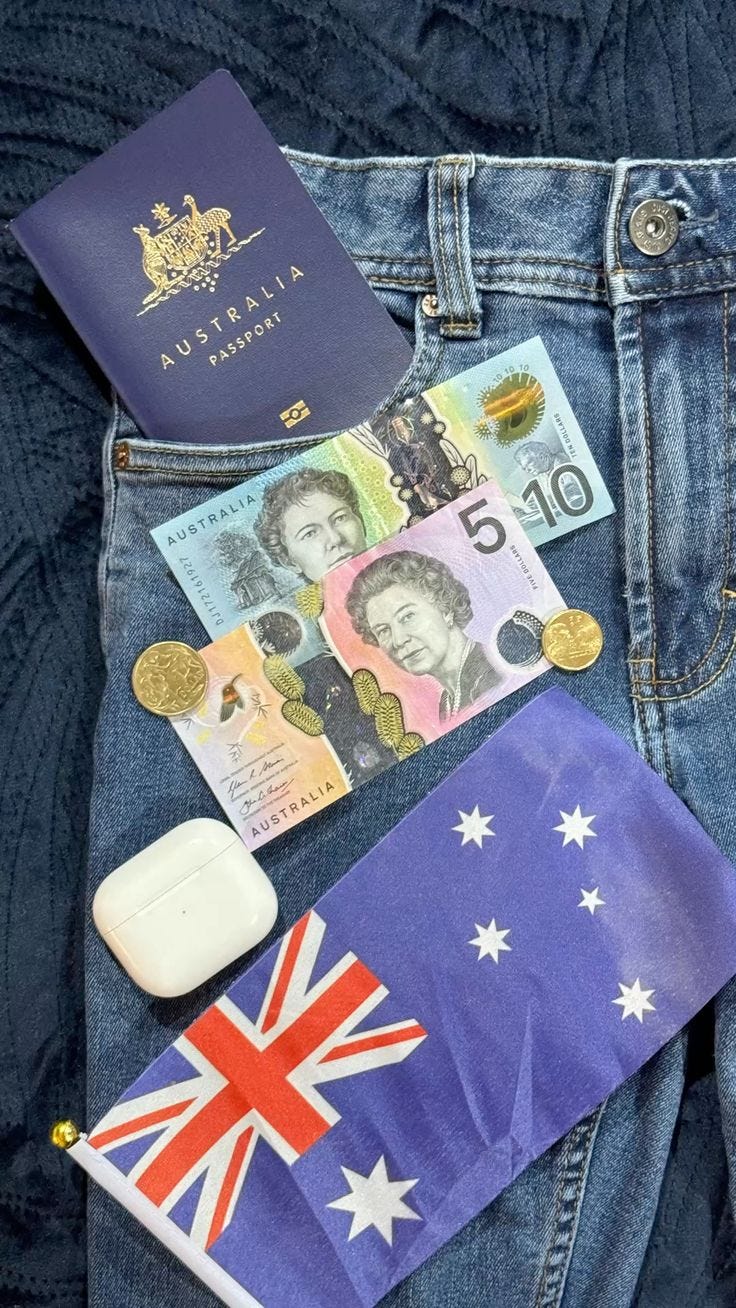
Australia made sense for the practical reasons. Especially for most young British people. It was english-speaking, easy to get a working holiday visa and familiar enough. But the working holiday visa limits you to six months with any single employer, which shuts you out of anything that requires real commitment from a company. No employer is hiring someone for six months when they can hire someone who can stay. Hospitality and bar work are the practical options. What he also knew was that the Gold Coast — where he landed — wasn't quite what he'd imagined.
He'd done his homework. Facebook groups, Google, YouTube videos, detailed ChatGPT prompts listing exactly what he wanted in an area. He'd watched TikToks about different parts of the Gold Coast.
But when he got there, he felt it wasn't quite right.
"I don't think the Gold Coast is my forever home. I wouldn't say I've fallen in love with it."
He came to the realization that choosing a place from research and actually living in it are two different things. It was a gap no amount of preparation fully closes. The plan now is to leave his hospitality job in January, travel around Australia properly, and then decide: a second year here, or New Zealand, or something else entirely.
When he first got to Australia, while searching for a job, Roamer 15 packed one cheap suit, got in the shower and tried to steam the wrinkles out in the room. He put it on anyway, walked into four hotels with a big smile, asked for whoever was hiring and led with his five-star experience.
All four wanted an interview. He had a job within three days.
"I had confidence because I had previous five-star luxury experience. I knew I'd pick up a role pretty quick."
The timing helped too. He moved in September, which he describes as early in the Australian spring, before the summer rush. Hotels were actively building their teams for the season. The accommodation he found was a cheap room with no windows, but it was in a convenient location and meant he didn't need a car.
He's written a 47-page guide on how to move to Australia and timing is one of the central arguments in it. Move in December or January and you're competing with everyone. Move a few months earlier and you get the jobs, the rooms, the footing — before the wave of arrivals washes through.
But he's honest about something else too. His move was easier than most.
"I am privileged. I am a white male who speaks English as a native language."
Working in hospitality put him alongside people for whom the exact same move looked completely different. Colleagues from different countries, different ethnicities, English not their first language. He spent months working in housekeeping with people he could only communicate with through Google Translate, and what he learned through that process stayed with him.
One of them had been an electrician back in India. He was qualified, experienced and skilled. But because he couldn't speak English, he was cleaning hotel rooms and the painful part was that England actually needed electricians.
"I thought that's a real shame. Because England needs electricians and if only he could do that, then, you know, it'd be great."
The bureaucratic side had its own surprises. When he applied for Medicare, his passport wasn't enough to prove prior UK residency. He needed additional documentation he hadn't anticipated. These are the small things that nobody thinks to mention until they're standing in a government office being told they're missing something.
For the visa and residency processes broadly, he's clear on two things: job hunting and accommodation are the two biggest stressors and they're also the two things he'd most want help with if he could hand anything off. There are companies that package all the setup — bank accounts, tax file numbers, the administrative groundwork — but that wasn't an option on his budget. He did it himself, documented every mistake and wrote it all into the guide so other people don't have to repeat them.
He also noted that Australia doesn't have what Europe has. He grew up surrounded by museums, different cultures bleeding into each other, centuries of history, food and tradition everywhere. He didn't know how much that had shaped him until it was gone. He'd hated museums as a kid. Only now does he understand they were doing something to him the whole time.
"There is no culture here, really. I say to people, it was good to come here for live music. I'm like, yeah. What do you do on Christmas? What are your traditions? Just go to the beach?”
Australia is sunny, easy and functional. But it isn't Europe and he misses Europe in a way he didn't expect to.
He's also noticed something about the friendships. Australians have a reputation for being difficult to get close to. He's met people through work and through his housemates, but he hasn't built the friendship group he imagined. He's honest about that on his social media too, because he thinks it's important not to sell a version of this that isn't real.
"I wouldn't say it's been a fairy tale. I thought I'd move over, form a big friendship group and get a hot surfer girlfriend or something like that."
Part of the social difficulty is his schedule. He works in hospitality and creates social media content, which leaves maybe two free hours in the day. He can't commit to a football club because his rota changes. But some of it is also the place itself and the fact that Australians are so used to people cycling through that they've stopped investing in connections that won't last.
A few weeks before this interview, something happened to him that he hadn't anticipated.
He looked at his life in Australia. He had few close friends. He was still working in hospitality. The only real difference from London was that it was sunnier.
"So that's why I've thought, okay, I need to make a change again."
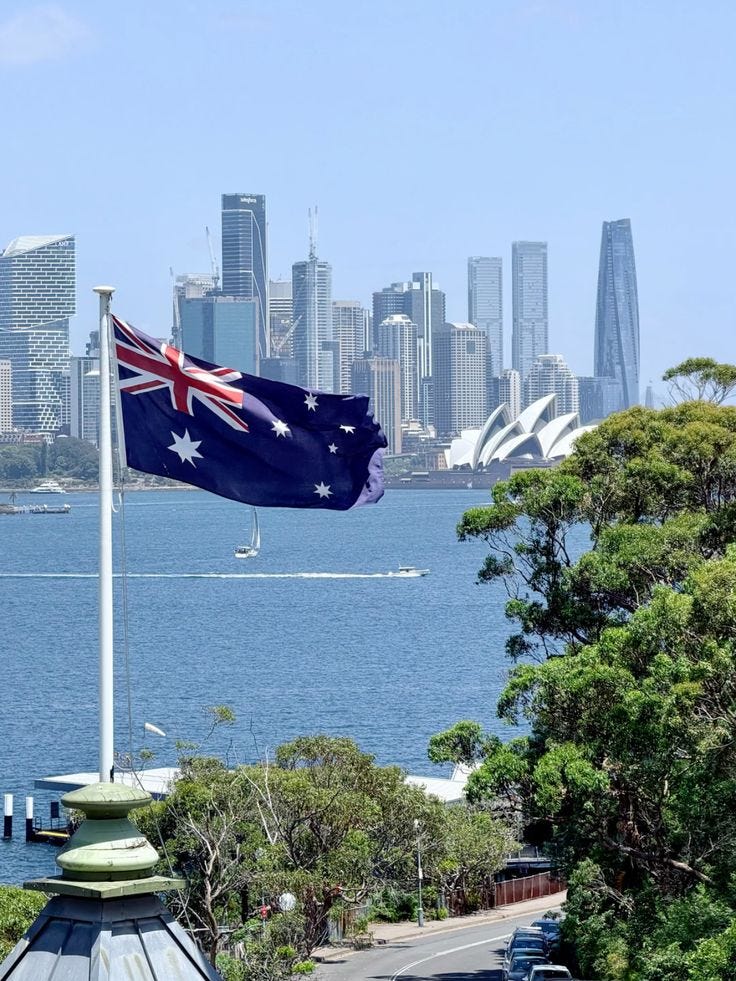
The plan is a secondhand van, a cheap air mattress in the back, money earned from his job and nothing else. He wants to travel Australia the same way he moved there — rough, real, and forced into conversations with strangers. He's seen what happens when you stay in a hostel versus a hotel and when you travel on almost nothing versus on a cushion. The cheaper version always produces better stories, better people, better tips on where to go and what to avoid.
"When you do it cheap and rough, you have to talk to people."
Roamer 15 has thought a lot about his generation. Housing is unaffordable, job prospects are poor and the playbook their parents handed them doesn't work anymore. The people who bought houses and held them for four years are now running countries, assuming that's all it ever took. It isn't. Not anymore.
But the best advice he's been given didn't come from a career coach or a YouTube video. It came from his father.
"Have a crisis now, get it all out the way. So then when you do have a wife and a kid and a house, you don't just leave them and move to Australia."
He's going back to the UK briefly for his mum's 60th birthday. He thinks it'll give him perspective on whether he wants to be back in Europe, or if the trip confirms that Australia, for all its imperfections, is still where he wants to be. He genuinely doesn't know yet.
But he is doing this alone with a growing social media following and a 47-page guide that exists because he made every mistake first and wanted to make sure someone else didn't have to.
"It always works out. You just have to find a way."
Roamer 15 is a British expat currently based on the Gold Coast, Australia, having moved from England six months ago. He documents his experience on social media and has published a free guide on moving to Australia. He is one of many expats interviewed as part of an ongoing project exploring what it really takes to build a life somewhere new.