


After 35 years in London, Roamer 10 was done. She was done with the weather that never got warm. Done with the rat race that kept you running but never got you anywhere. Done with Brexit and the politics it dragged in like mud on expensive shoes.
She was born in Italy but left 40 years ago for good reason. She’d built a life in London—first in information technology for investment banks, then as a garden designer with a business so successful it stopped being enjoyable. She spoke English fluently, had friends, had roots, and she was ready to pull them all up.
“I just wanted to try a warmer country where life perhaps was a little bit easier and a slower pace,” she tells me. “So I chose Spain. I wasn’t sure I was going to remain in Spain, but it was certainly my stepping stone.”
That was 2019. Just before the world stopped.
She arrived in Malaga with a plan that wasn’t really a plan. More of a vibe. Explore Spain, see if it fit. Maybe move to Italy eventually since she spoke Italian and had the passport to go anywhere in Europe.
Then COVID hit.
“I stayed,” she says simply. “And I decided to remain for the time being.”
It’s funny how that works. How a temporary escape becomes permanent not because you planned it that way, but because the universe shut down all your other options and you realized you were actually okay with where you landed.
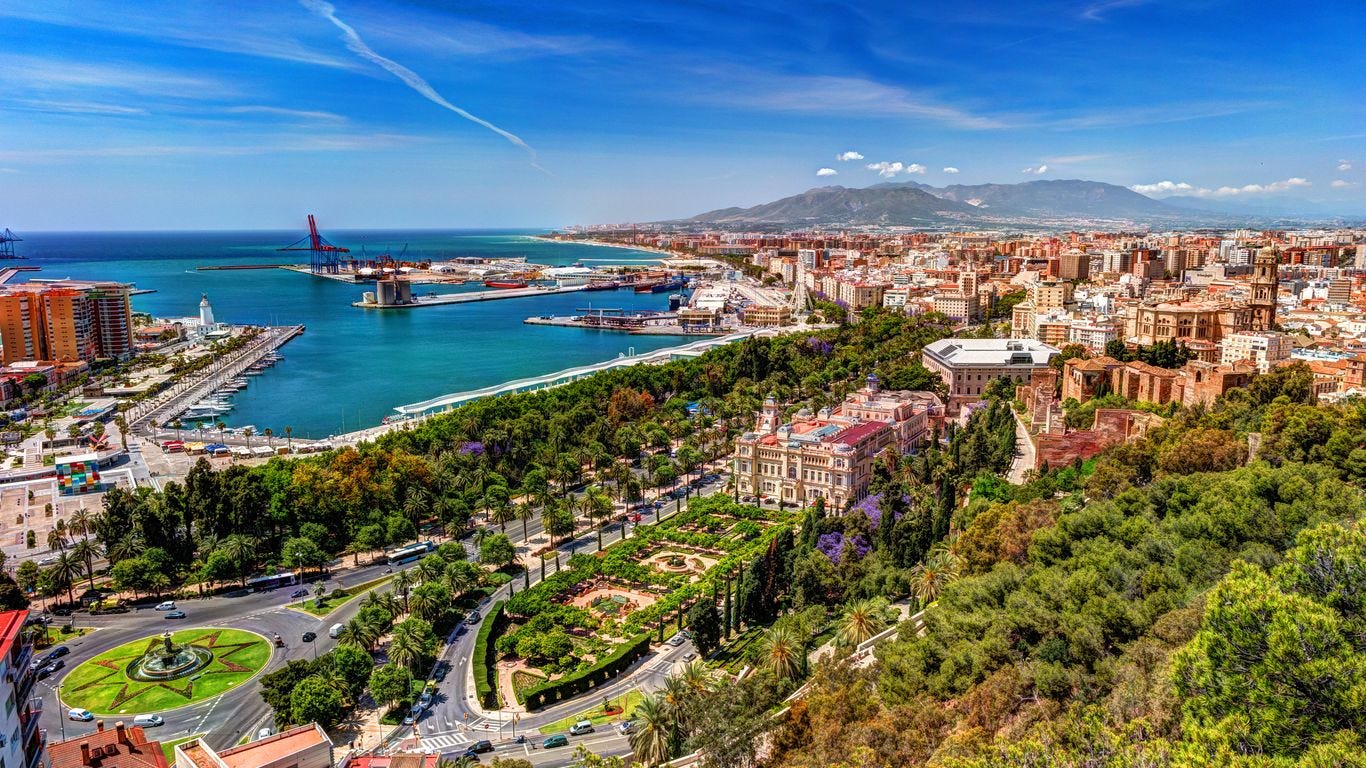
Five years later, she’s still in Malaga and she’s also still not sure if it’s her forever home. She still has reservations about moving to Italy because of the politics and because, honestly, she prefers Spanish people to Italians even though she’s Italian herself.
There’s something deeply relatable about that. The way we can love where we’re from and still not want to go back. The way home becomes a complicated concept when you’ve lived long enough to know that geography doesn’t define belonging.
Before Spain, Roamer 10 had already reinvented herself once. She’d spent years in information technology, working for investment banks in London—the kind of job that pays well but slowly drains you until you realize you’re living for weekends and dreading Mondays.
So she left. Retrained as a garden designer, followed her passion and built a business that was actually successful.
Too successful, it turned out. “My business was very successful, but I just ended up working too much because it was so big. It stopped being something that I enjoyed.”
Success is a strange trap. You work to build something you love, and then the thing you built becomes the thing that imprisons you. More clients, more projects, more running around London trying to keep up with demand. The dream becomes a job, and the job becomes the thing you need to escape from.
So she asked herself: what job would let her work from anywhere in the world?
The answer was teaching English.
She already spoke the language fluently. She could retrain. And most importantly, she could do it remotely—85% of her work now happens online. She can work from anywhere in Europe with an internet connection.
“I achieved really what I wanted to do,” she says, “which was to be able to work remotely from anywhere in the world.”
It’s not the garden design dream she started with. But it’s the freedom dream she needed.
The hardest part wasn’t leaving London. It wasn’t giving up her business or saying goodbye to friends. It was landing in Andalucía and realizing she couldn’t understand anyone.
“I thought I spoke a little Spanish,” she admits. “But the problem is, people in Andalucía speak a very different type of Spanish. I couldn’t understand.”
And when you can’t understand, you can’t integrate. You end up hanging out with other expats—which is fine, except it’s not why you moved. You didn’t leave one English-speaking city to recreate it in a warmer location.
“For me, living in a country, I want to be part of the culture. I want to integrate.”
So she did the work. She improved her language skills. She volunteered at a dog shelter because she loves dogs and because it put her around Spanish people. She took dance classes. Swing and Lindy Hop, specifically, which meant learning not just the language but the rhythm of how people in Andalucía move through the world.
She stopped going to language exchange events because everyone just wanted to practice their English. Instead, she built her social circle around hobbies where Spanish was the default.
Five years in, she’s integrated. Not perfectly (is anyone ever perfectly integrated anywhere?) but enough. Enough to feel like she belongs. Enough to prefer Spanish people to the Italians she technically is. Enough to stay.
“Before moving, I should have taken Spanish classes,” she says. “I should have raised my level higher than it was when I came here.”
She knows British people who’ve lived in Spain for years and still don’t speak Spanish. They never integrate. They recreate England in Spain and then complain that Spain isn’t England.
“Definitely, the number one thing is learning the local language. You really need to relax and adjust to the way things are in a different country.”
Her advice for anyone considering a move: visit first. Rent for a month or two. See if you actually like it before committing.
And then—this is the part that matters—be flexible.
“You can have a plan, you can have a strategy, but your strategy and plan have to have some flexibility. If you’re too rigid, you suffer. Things happen. Like COVID, for example. I wasn’t planning to stay here, but COVID came, so I had to readjust.”
The ability to pivot isn’t just a business skill. It’s a life skill. Especially when you’re building a life across borders.
“One thing I think is important is not to be afraid,” she tells me. “Moving to another country can be scary. Fear can be paralyzing. But you need to overcome that fear because then you realize there was really nothing to be afraid of. It’s just a mental block.”
She applies this philosophy to all areas of her life, not just moving abroad. But it’s particularly true when you’re standing at the edge of a decision that could change everything.
“Sometimes it’s scarier to stay in a place where you’re not happy than to actually make a change and try something new.”
That’s the thing nobody tells you about staying put. We think of it as the safe option, the default, the path of least resistance. But staying in a place that drains you—whether it’s a city or a job or a relationship—isn’t safe. It’s just slow erosion. It’s choosing to be uncomfortable in a familiar way instead of uncomfortable in a way that might lead somewhere better.
Roamer 10 chose uncomfortable in a new way. She chose not understanding the language and rebuilding her social circle and figuring out Andalusian Spanish and whether Malaga would be home.
And five years later, she’s still there. Still not sure if it’s forever. Still open to the possibility of somewhere else. But also? Still there.
It’s worth pointing out what makes Roamer 10 story possible: an Italian passport.
She doesn’t need a visa for Spain. She can work anywhere in Europe. She has options that most people don’t have, and she knows it.
“I was fortunate enough to have a European passport, so I could really move anywhere in Europe,” she says.
That passport is the difference between “I’m ready for a change” being a daydream and being a Tuesday afternoon in Malaga. It’s the difference between flexibility and bureaucracy. Between exploring and being stuck.
Not everyone has that privilege. And for those who don’t, the process is exponentially harder.
But even with the passport, even with the flexibility, even with the language skills and the remote work setup—it still took courage. It still took leaving behind 35 years of life in London. It still took showing up in a new country and doing the uncomfortable work of integration.
The passport opened the door. She’s the one who walked through it.
If you’re thinking about moving abroad, Roamer 10’s advice is simple:
Learn the language before you go because language is the bridge to integration, and integration is the bridge to actually living somewhere instead of just existing there.
Visit before you commit. Spend a month. See if you like it. See if you can see yourself there not just on vacation but on a random Tuesday when nothing interesting is happening.
Be flexible. Have a plan, but hold it loosely.
And most importantly: don’t let fear keep you in a place where you’re unhappy.
“There’s really nothing to be afraid of,” she says. “Sometimes it’s scarier to stay than to leave.”
Roamer 10 isn’t sure if Malaga is her forever home. She might move to Italy. She might go somewhere else entirely. She might stay exactly where she is for another five years and then wake up one day and realize she’s put down roots without meaning to.
But that’s the point, isn’t it? You don’t have to know forever. You just have to know what’s next.

For her, next was Spain. Next was leaving the rat race and the gray skies and the politics that made her tired. Next was volunteering at a dog shelter and learning Lindy Hop and teaching English to people in time zones she’ll never visit.
Next was choosing flexibility over certainty. Choosing to try over choosing to stay put.
And five years later, she’s still choosing. Still flexible. Still open to what comes next.
I think that’s what moving abroad teaches you: home isn’t a place you find. It’s a choice you make, over and over, until one day you realize you’ve been home all along.
Even if you’re not sure you’ll stay forever.
Even if you’re still learning the language.
Even if you left 40 years ago for good reason and came back anyway, just in a different country, with different weather, and a completely different life.
Sometimes the stepping stone becomes the destination, and sometimes that’s exactly what you needed all along.
My pleasure, Sydney! 😍
Another belter, Sydney! You’re knocking them out of the park now! 🙌